What Is Pool Waterproofing and Why Is It Important?
Pool waterproofing is a set of technical solutions applied to ensure the water tightness of the pool structure. It not only prevents water from leaking out of the pool but also protects the structure from external factors.
Concrete pools are naturally permeable due to their porous structure, which inevitably leads to water loss if proper insulation is not applied.
Therefore, in swimming pool projects, waterproofing plays a vital role in both water conservation and structural durability.
Insufficient waterproofing can lead to reinforcement corrosion, concrete cracks, and structural weaknesses over time.
Additionally, leaking water can damage the surrounding soil structure and cause serious engineering problems.
For this reason, waterproofing systems in professional pool projects should be planned from the design stage and implemented with the correct techniques.
For more details, you can review our complete guide on why pool waterproofing is important guide.
Main Causes of Water Leakage in Concrete Pools
1. Structural Cracks
One of the most common causes of water leakage in concrete pools is structural cracks.
These cracks usually occur due to improper concrete mix, insufficient curing, ground movements, or temperature changes.
Especially mistakes made during the swimming pool construction phase increase these risks.
2. Cold Joint Problems
Cold joints formed during concrete pouring, which are the connection points between two separate pours, are among the most critical areas in terms of waterproofing.
If proper waterstop systems are not used in these areas, water leakage becomes inevitable.
Therefore, correct engineering solutions should be applied together with balance tank systems.
3. Incorrect Waterproofing Material Selection
If the appropriate waterproofing material is not selected for each pool project, the applied system may lose its function in a short time.
For example, standard coating materials may not perform adequately in pools exposed to high water pressure.
At this point, the selection of correct chemical products is also important; system balance should be ensured with pool chemicals.
4. Application Errors
Even the highest quality materials can become ineffective if applied incorrectly.
Insufficient surface preparation, incorrect layer thickness, incomplete detail solutions, and improper curing times can cause the waterproofing system to fail.
Basic Methods Used in Pool Waterproofing
1. Cementitious Coating Systems
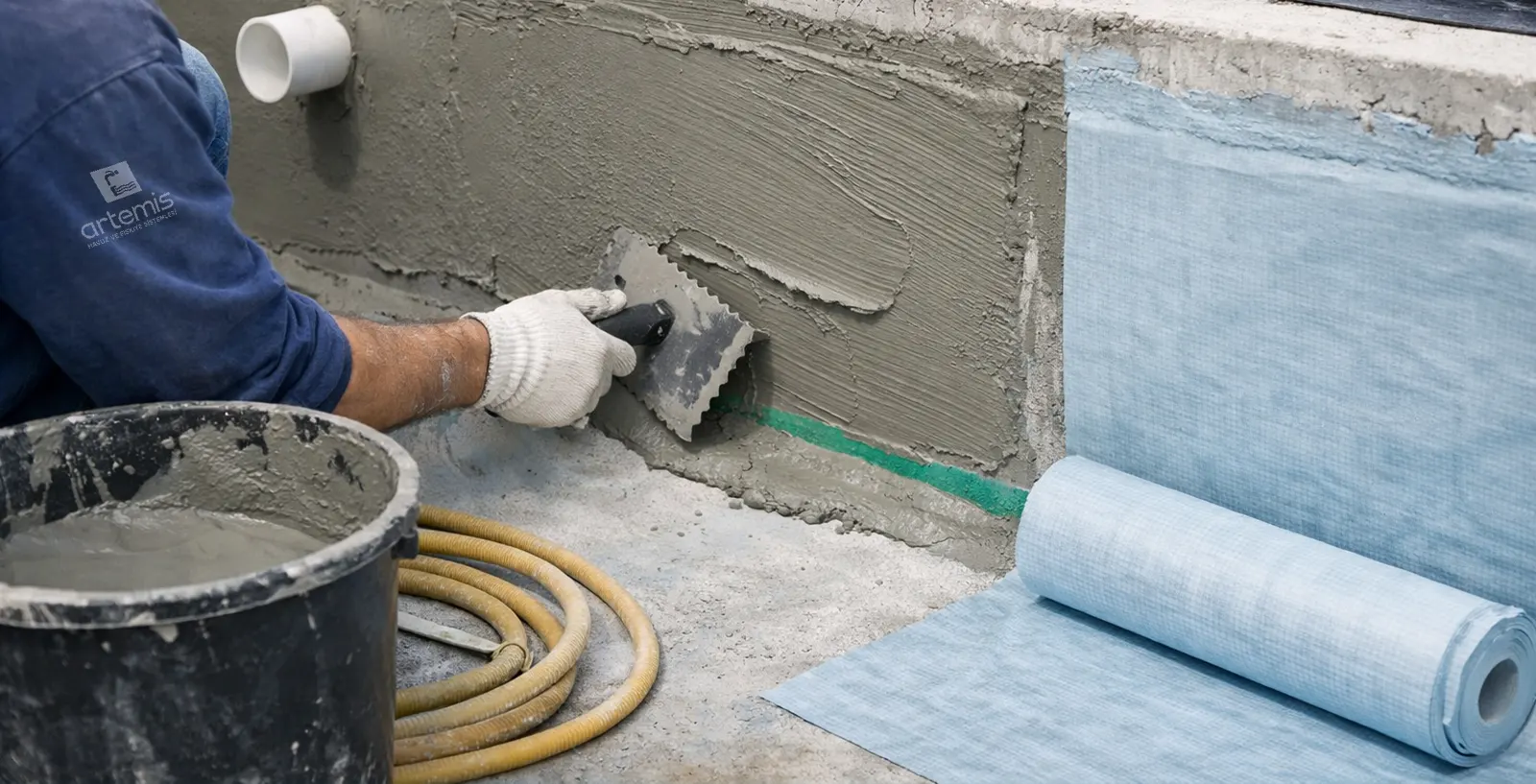
Cement-based or polyurethane waterproofing materials are applied to the surface with a brush or trowel.
These systems are generally preferred in small and medium-sized pools.
2. Crystalline Waterproofing
Crystalline waterproofing systems penetrate into the pores of concrete and form crystals upon contact with water, providing permanent waterproofing and strengthening the concrete structure.
3. Membrane Waterproofing Systems
PVC or EPDM membranes are applied to the pool surface to ensure water tightness.
These systems are widely used especially in indoor swimming pools.
4. Injection Method
The injection method, used to repair existing leaks, involves injecting special chemicals into cracks under pressure.
Choosing the Right Waterproofing Material
The success of the waterproofing system largely depends on the quality of the materials used.
In modern projects, elements such as pool lighting systems should also be planned in integration with the structure.
- High elasticity
- Chemical resistance
- UV resistance
- Long lifespan
- Ease of application
Professional Application Stages
Surface Preparation
The concrete surface must be clean, smooth, and structurally sound.
Primer Application
The primer layer improves adhesion and increases system performance.
Application of Waterproofing Layers
Multiple layers should be applied according to the system, allowing proper curing time between each layer.
Protective Coating
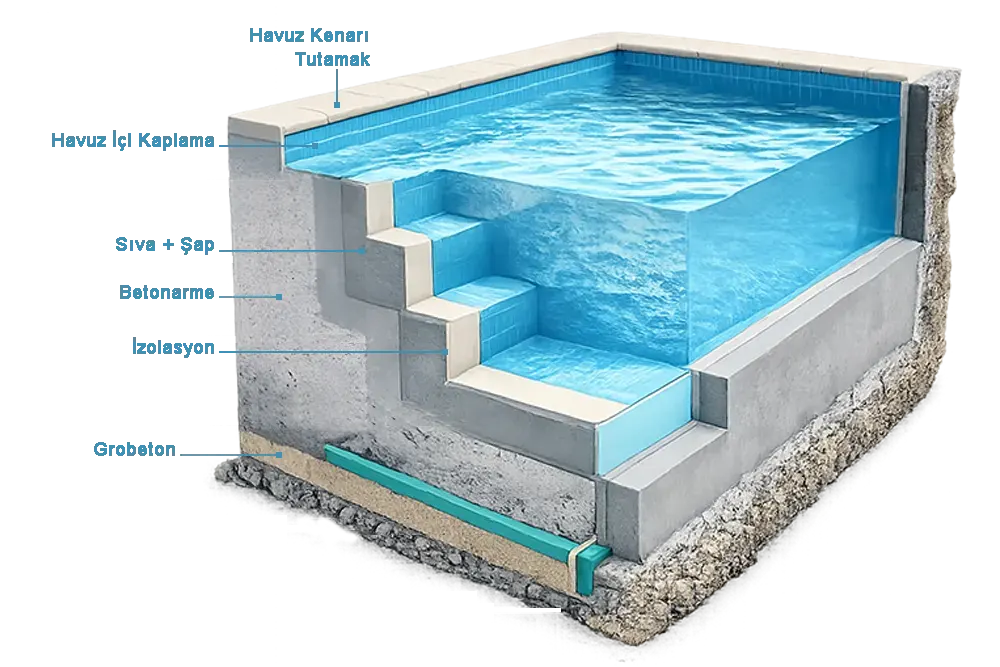
The waterproofing layer is protected with ceramic, mosaic, or special coating materials.
Conclusion: Proper Waterproofing = Long-Lasting Pool
Pool waterproofing is not just an application but an engineering process. Especially in different designs such as infinity and skimmer pool systems, proper waterproofing is essential.