info@artemispool.com
+90 505 732 57 56
Pool Filtration Systems – Artemis Pool & Fountain Systems

Pool Filtration Systems: Best Solutions for Healthy Water

In swimming pools, clear, hygienic, and safe water is based on a proper filtration system. In this article, we detail filter types, pump and balance tank selection, automation and energy-efficient solutions, as well as essential maintenance tips.

Why Are Pool Filtration Systems Critically Important?

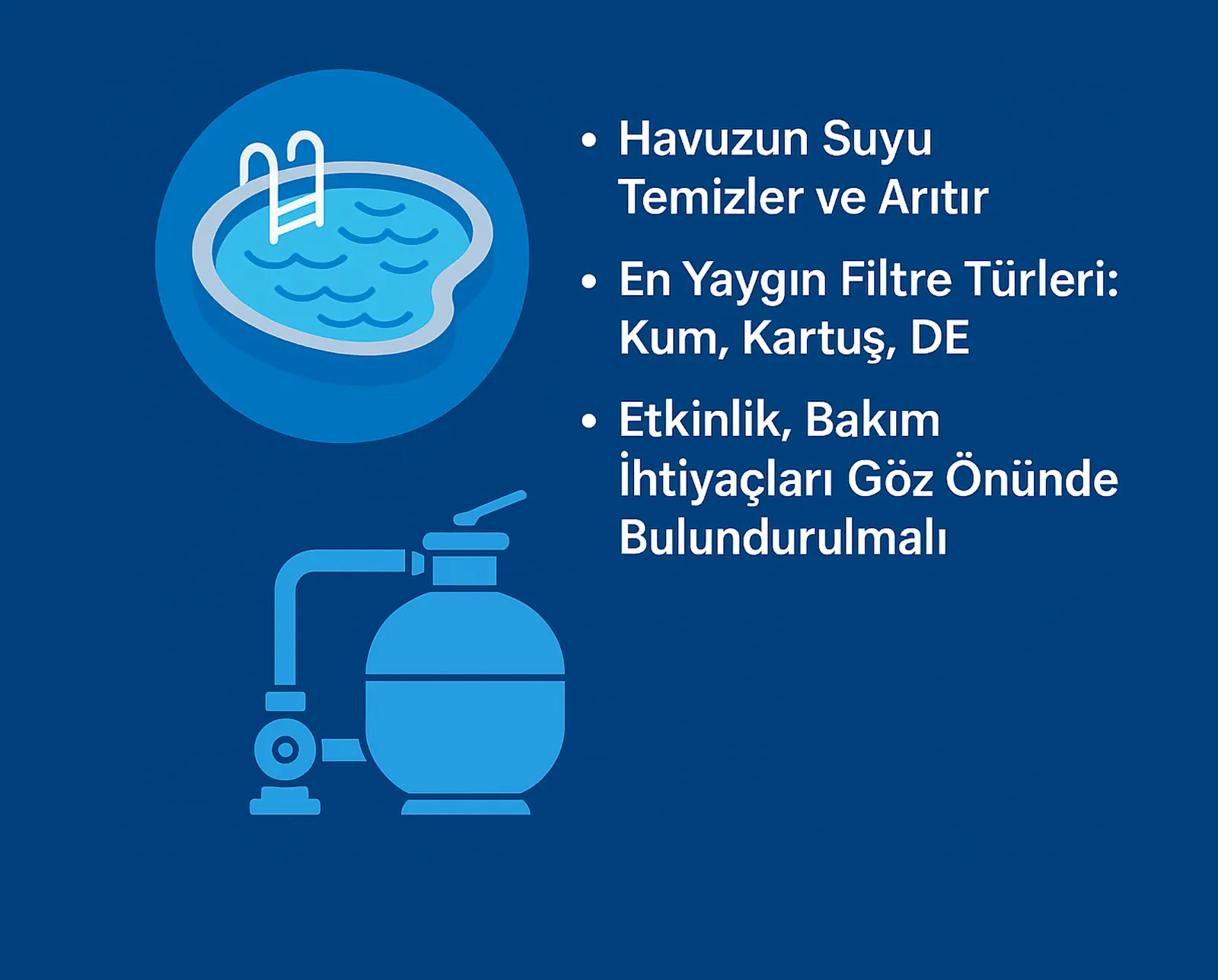
Pool filtration systems ensure not only visually clear water, but also hygienic, balanced, and sustainable pool operation. With properly selected filters, pumps, and hydraulic components, suspended solids, oils, and microscopic contaminants are effectively removed from the water. This reduces chemical consumption, extends equipment lifespan, and lowers operating costs. Sand, glass media, cartridge, and D.E. filter solutions—when optimized according to pool usage intensity, volume, and design—deliver both energy efficiency and maximum water quality. A professional filtration infrastructure forms the foundation of a healthy swimming experience.

Why Are Pool Filtration Systems Critically Important? - Artemis Pool
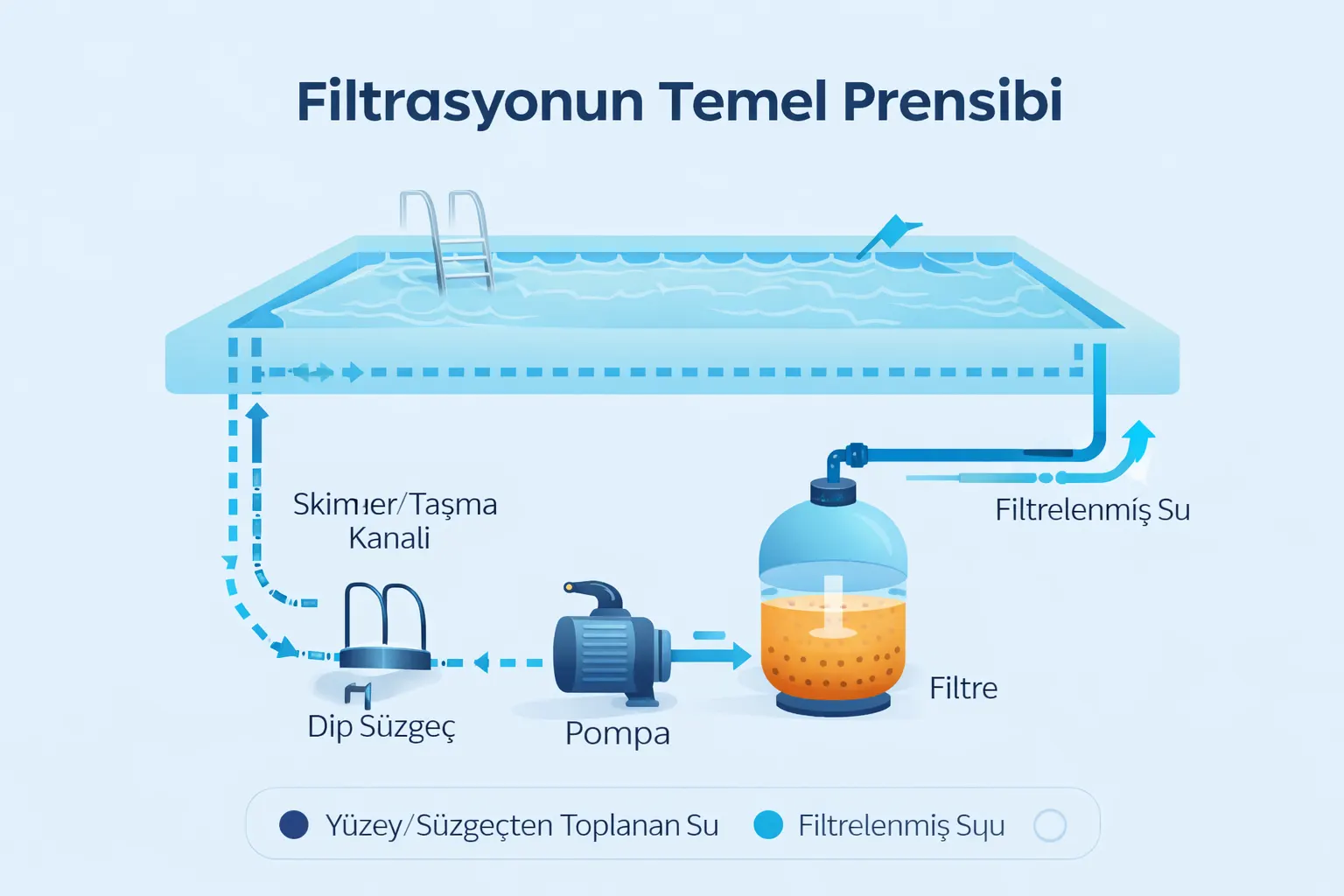
Basic Principle of Filtration

Basic Principle of Filtration

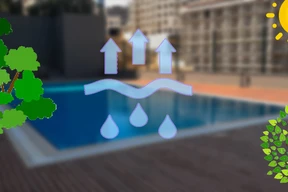
The cycle of collecting water from skimmers/overflow channels and main drains, sending it to the filter via the pump, and returning filtered water to the pool through return lines is repeated several times a day. The goal is to filter the entire pool volume frequently enough according to the design turnover rate.

Filter Types and Comparison

Sand Filters

  • Pros: Cost-effective, durable, reliable for large volumes.
  • Cons: Regular backwash water loss; media replacement every 3–5 years.

Glass Media Filters

  • Pros: Longer lifespan, less backwash, better fine particle retention.
  • Cons: Higher initial investment than sand.

Cartridge Filters

  • Pros: High precision for small pools/spas, low water consumption.
  • Cons: Increased maintenance frequency for large volumes; cartridge replacement required.

D.E. (Diatomaceous Earth) Filters

  • Pros: Crystal-clear water at 2–5 micron filtration level.
  • Cons: Relatively higher maintenance and operating costs.
Recommendation: For villas/residences, glass media or high-quality sand; for commercial and high-usage pools, automated multi-sand filter systems are common.

Pumps, Hydraulics, and Balance Tank

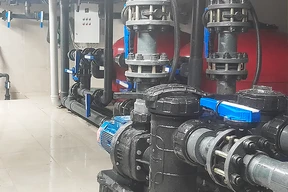
Pumps are the heart of filtration. Flow rate, head pressure, and hydraulic losses must be calculated per project. The balance tank stabilizes surface circulation in overflow systems and stores water during peak loads.

Backwash

Triggered when filter clogging and pressure differential increase. Can be automated via timer or differential pressure; glass media and optimized cycles are preferred to reduce water consumption.

Automation and Energy Efficiency

  • Variable Speed (Inverter) Pumps: 30–50% energy savings, low noise.
  • Smart Control: Mobile interface monitoring for filtration, lighting, and dosing.
  • Pressure/Level Sensors: Backwash optimization and overflow balance.

Tip: Increasing flow during peak daytime hours and reducing it at night significantly lowers total energy consumption.

Chemical Balance Relationship

ParameterRecommended Range
Free Chlorine1–3 ppm
pH7.2–7.8
Total Alkalinity80–120 ppm
Calcium Hardness200–400 ppm

Filtration manages physical contamination, while chemical balance controls microbiological risk. Automatic pH/ORP dosing systems reduce human error.

Common Mistakes

  • Insufficient filtration time (generally at least 6–8 hours per day).
  • Incorrect pump/filter matching, sand carryover at high speeds.
  • Excessively delayed media replacement.
  • Neglecting balance tank ventilation and overflow safety.

Maintenance Schedule

  • Weekly: Check pressure differential, backwash if necessary.
  • Monthly: Skimmer baskets, hair strainers, cartridge cleaning.
  • Seasonal: Pump periodic maintenance, valve/seal inspection.
  • Every 3–5 Years: Sand media replacement (less frequent for glass).

Conclusion

When the right filter type is matched with the correct pump and automation and supported by regular maintenance, pool water can be managed both clearly and economically. Make selections by evaluating project-specific needs, usage intensity, and targeted energy savings together.


Related articles: Infinity PoolsPool AutomationIndoor Pools

Our Reference Videos

Short highlights from our real projects.

Free price quote for pool projects - Artemis Pool

E-Catalog

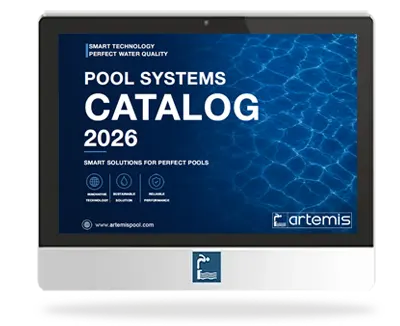
As Artemis Pool & Fountain Systems, you can access detailed information about our products, applications, and fields of activity through our E-Catalog. Our engineering-focused solutions and professional services in compliance with international standards are summarized in this catalog.

Download the Catalog (PDF)