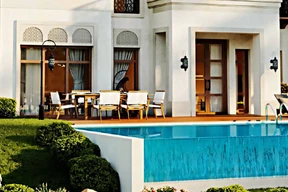
What Is an Ornamental Pool? Where Is It Used?
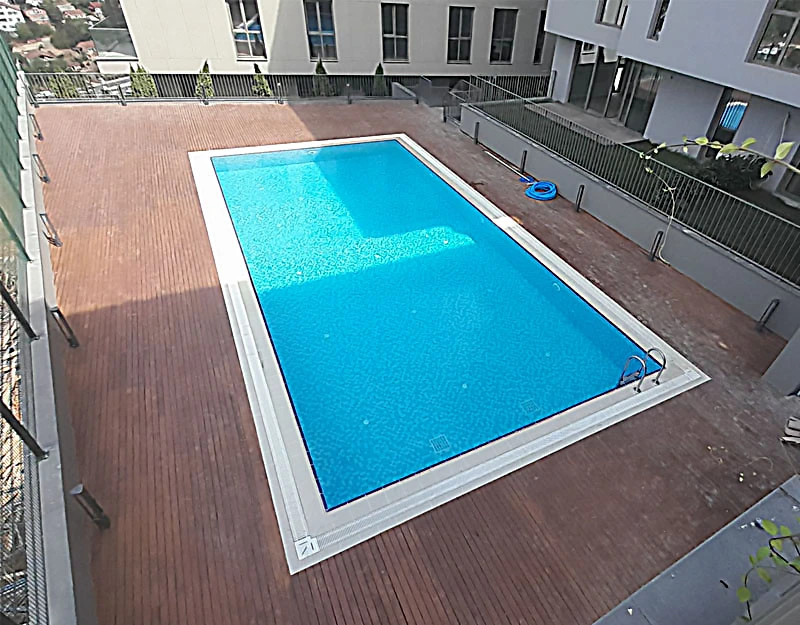
Ornamental pools are water structures designed not for swimming purposes, but entirely to create visual and spatial impact. They can be implemented as still water surfaces, dynamic fountains, water curtains, or animated systems.
The main areas of use are as follows:
- Hotels and resorts
- Shopping malls and commercial buildings
- Municipal squares and parks
- Residential projects and villa gardens
- Office buildings and indoor atriums
- Landscape designs and recreational areas
Each area of use requires different technical and aesthetic approaches in ornamental pool design.
Key Criteria in Ornamental Pool Design
A successful ornamental pool application is not a randomly executed decorative work. The design process requires architectural, engineering, and operational perspectives to be evaluated together.
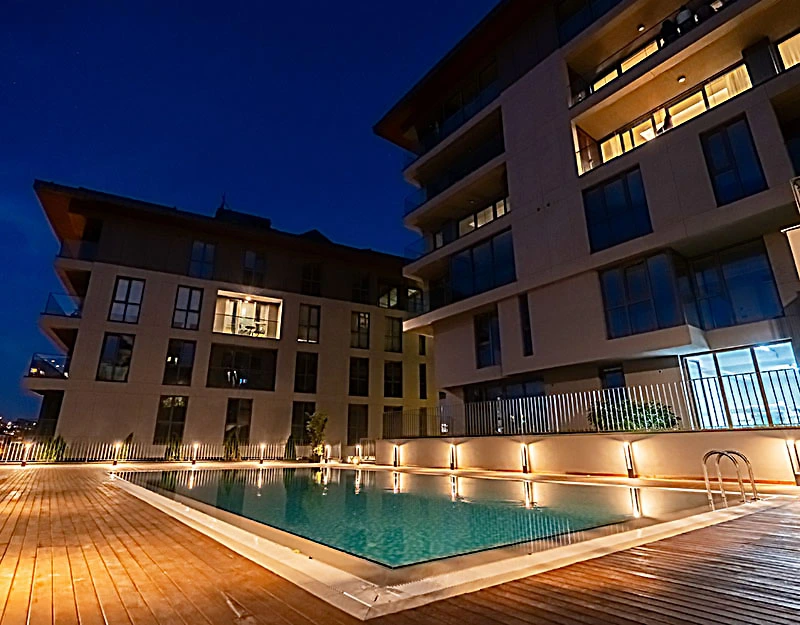
Architectural Harmony
The pool form should be compatible with the surrounding architectural language. While sharp lines and reflective surfaces stand out in modern architecture, natural stone, rounded forms, and smooth transitions are preferred in classical structures.
Hydraulic and Technical Calculations
If fountain heights, flow rates, pump capacities, and piping systems are not calculated correctly, visual quality decreases and the system fails in a short time.
Ornamental pools are continuously operating systems. Therefore, energy consumption directly affects long-term costs. Variable speed pumps, LED lighting, and automation systems play a critical role at this point.
Types of Ornamental Pools
Fountain Ornamental Pools
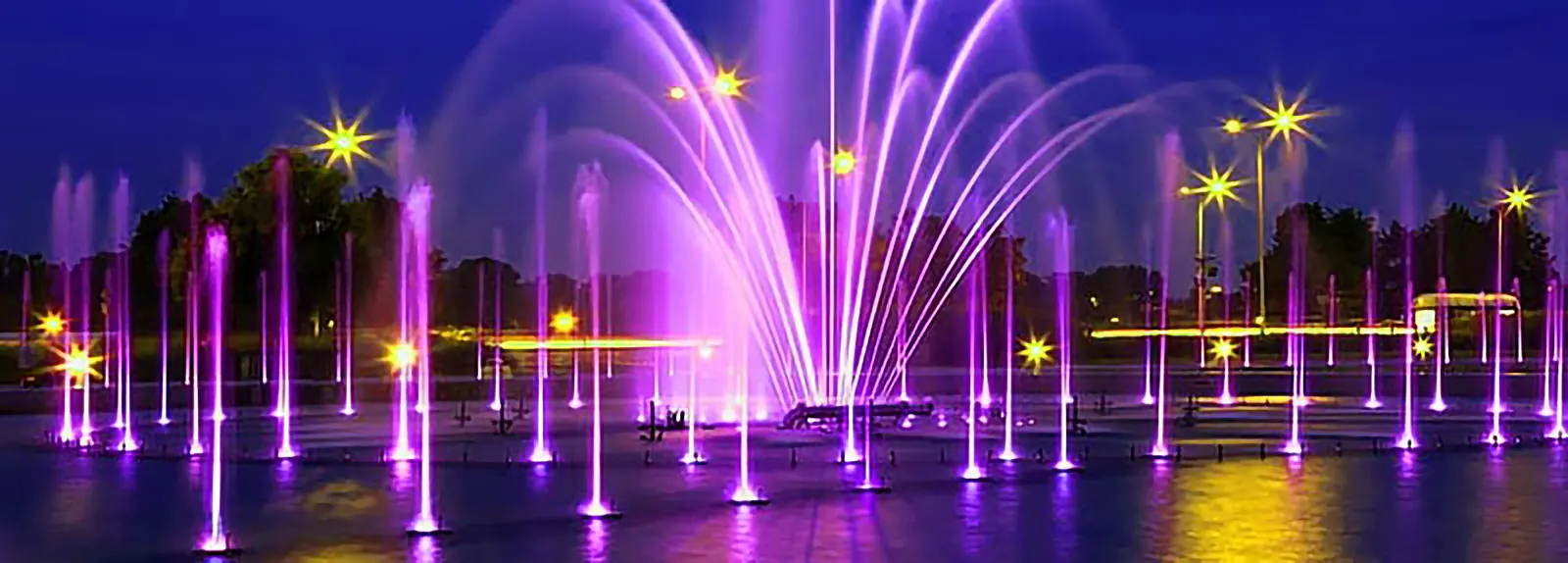
This is the most commonly used type of ornamental pool. Different water effects are created with single or multiple nozzles. Wind conditions, area size, and viewing distance are determining factors in the design of these systems.
Musical and Animated Pools
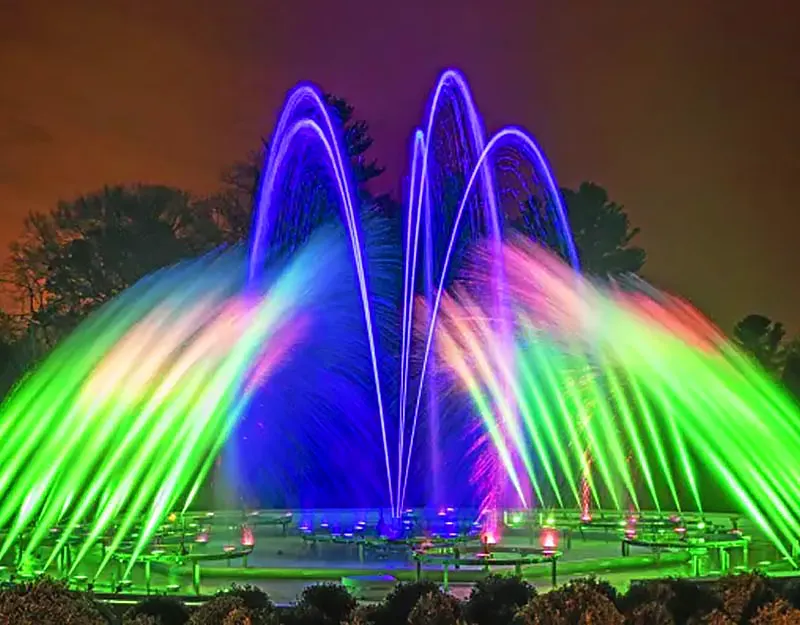
These systems, in which water, light, and music are synchronized, offer high visual impact especially for squares and hotels. They are programmed with PLC-based control systems.
Dry Fountain Systems
They are preferred in areas open to pedestrian traffic. The water surface is not visible and emerges from below the ground. It is a safe and entertaining solution for children and public spaces.
Water Curtains and Wall Waterfalls
They are used in indoor spaces or on building facades. Water flows along a vertical surface, creating a calming and sophisticated atmosphere.
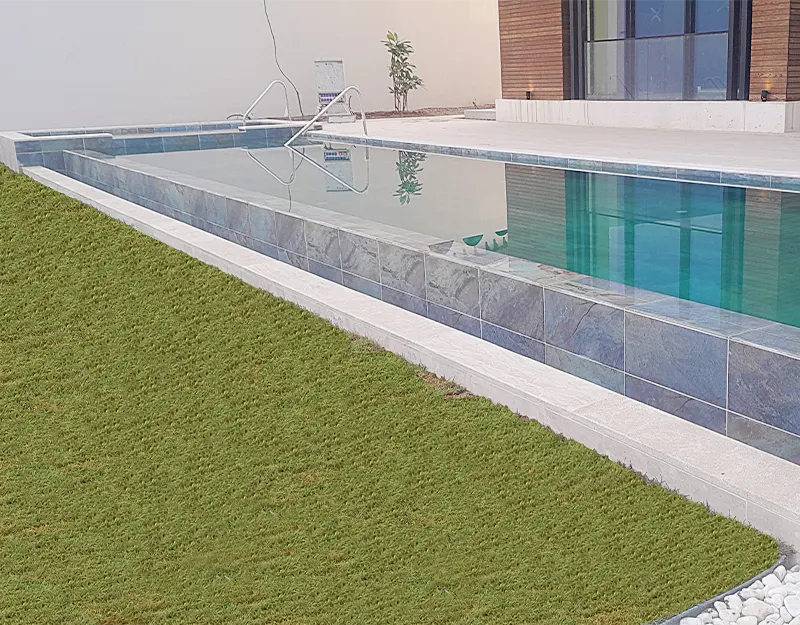
Reflecting Pools
They are indispensable in minimalist architecture. The still water surface reflects surrounding structures and the sky, providing spatial depth.
Technical Equipment Used in Ornamental Pools
The long-lasting and trouble-free operation of an ornamental pool is directly related to the quality of the equipment used.
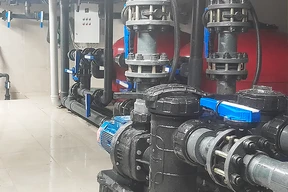
- Circulation and fountain pumps
- Stainless steel or bronze nozzles
- LED underwater lighting
- Filtration and balancing tanks
- Automation and control panels
- Chemical balance and water conditioning systems
Each of these pieces of equipment should be selected specifically for the project and evaluated within the integrity of the system.
Maintenance and Operation Processes
Although ornamental pools may appear to require less maintenance compared to swimming pools, when neglected they quickly lose their aesthetic value.
Within the scope of regular maintenance:
- Water levels and chemical balance are checked
- Filters are cleaned
- Nozzles and lighting are inspected
- Pump and automation systems are tested
Professional maintenance plans both extend the system’s lifespan and prevent unexpected failures.
Ornamental pools are not details that can be “added later.” They should be addressed during the architectural project phase and considered together with infrastructure and electrical plans.
An improperly designed ornamental pool:
- Experiences constant failures
- Does not create the expected visual impact
- Leads to high operating costs
For this reason, ornamental pool projects must be carried out by engineering and implementation teams specialized in this field.
Add Value to Your Space with Ornamental Pools
A properly designed ornamental pool increases not only the aesthetics of its location but also its perceived value. It creates prestige for hotels, brand strength for commercial buildings, and social attraction points for public spaces.
Ornamental pools give character to spaces by combining the calming effect of water with the possibilities offered by technology. Therefore, each project should be handled specifically within its own context, and standard solutions should be avoided.