Pool Renovation: System Failures, Mosaic Renewal, Plumbing and Leak Repair
Renew Your Pool for a Safe, Aesthetic and Long-Lasting Result
15 August 202619 min readShare
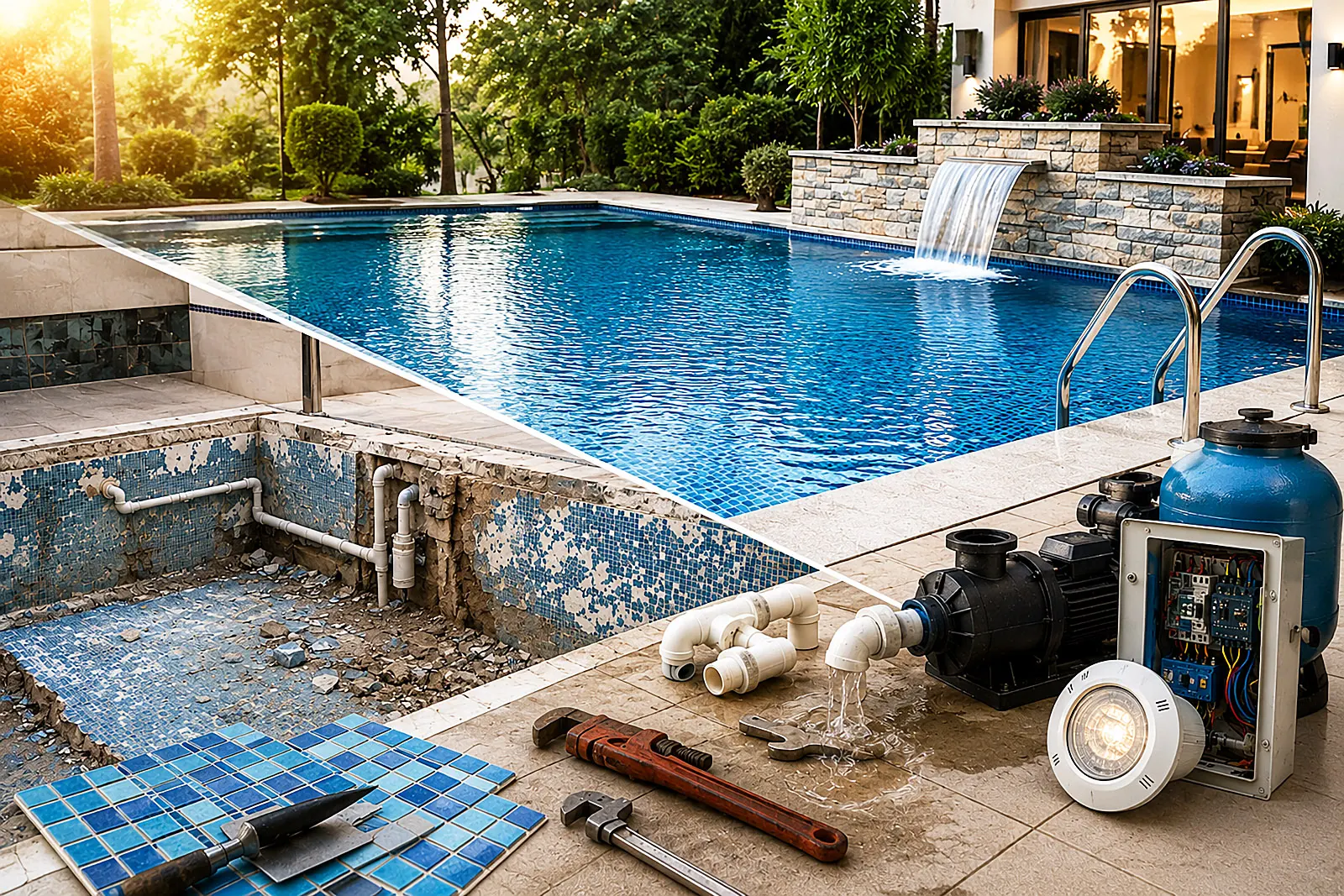
Pool renovation is a comprehensive process that restores swimming pools that have deteriorated over time, developed technical problems or lost their aesthetic appearance, making them functional, safe and modern again. Professional pool renovation involves not only renewing the exterior appearance of the pool, but also inspecting the filtration system, pump equipment, plumbing lines, electrical system, waterproofing, mosaic finishes and other technical components.
Since pools are constantly exposed to water, moisture, chemicals, sunlight and temperature changes, it is normal for various problems to develop over time. Deteriorated grout, broken mosaics, water leaks, plumbing problems, pump failures and electrical system issues can negatively affect both the comfort and safety of pool use.
With professional pool renovation, necessary repairs can be carried out without completely rebuilding the existing pool, aging components can be renewed, and the service life of the pool can be significantly extended. In this article, we will examine in detail when pool renovation is necessary, how system fault detection is carried out, mosaic and plumbing renewal processes, leak and break repairs, and the key points to consider when inspecting electrical systems.
✔ 30+ years of experience ✔ Professional project planning ✔ Turnkey pool solutions
Detailed technical comparison, cost analysis and proper selection guide for pool renovation, maintenance and repair.
Renew your aging pool, solve problems before they grow and bring it back to life.
Pool renovation is not merely about replacing a broken mosaic or fixing a visible malfunction. Evaluating the plumbing, filtration, pump, electrical and insulation systems operating beneath and behind the pool as a whole is of great importance for ensuring that the pool can be used safely, hygienically and for many years.
Water leaks, plumbing problems, cracks and breaks, worn mosaics or technical systems experiencing performance loss may initially appear to be minor issues. However, if they are not addressed at the right time, these problems can turn into more extensive damage and higher repair costs. With professional system fault detection and properly planned renovation work, the existing structure of your pool can be preserved while restoring its usability and aesthetic appearance.
Artemis Pool provides professional solutions for pool renovation projects by evaluating system fault detection, mosaic renewal, plumbing repair, leak and crack repair, as well as electrical inspection and renovation as a whole; transforming your existing pool into a safe, aesthetic and long-lasting living space.
Free Consultation for Professional Renovation and Repair
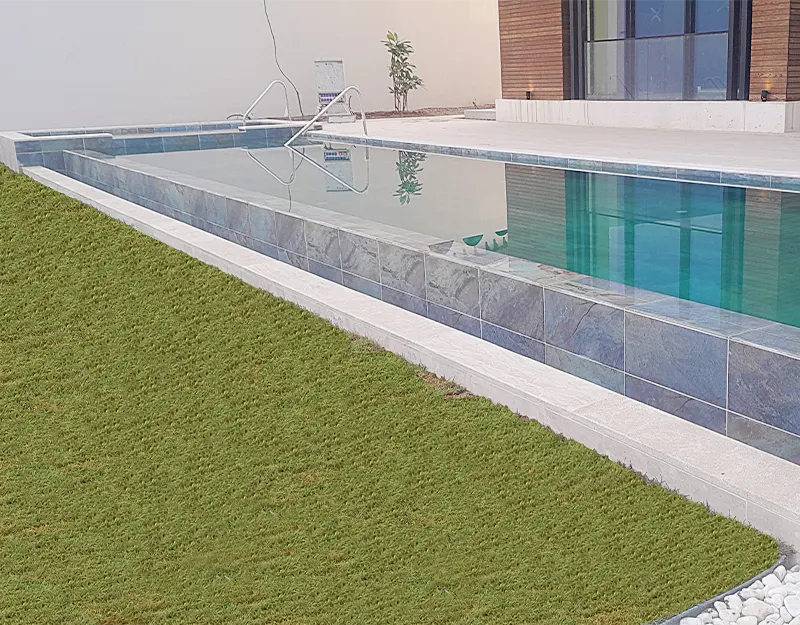
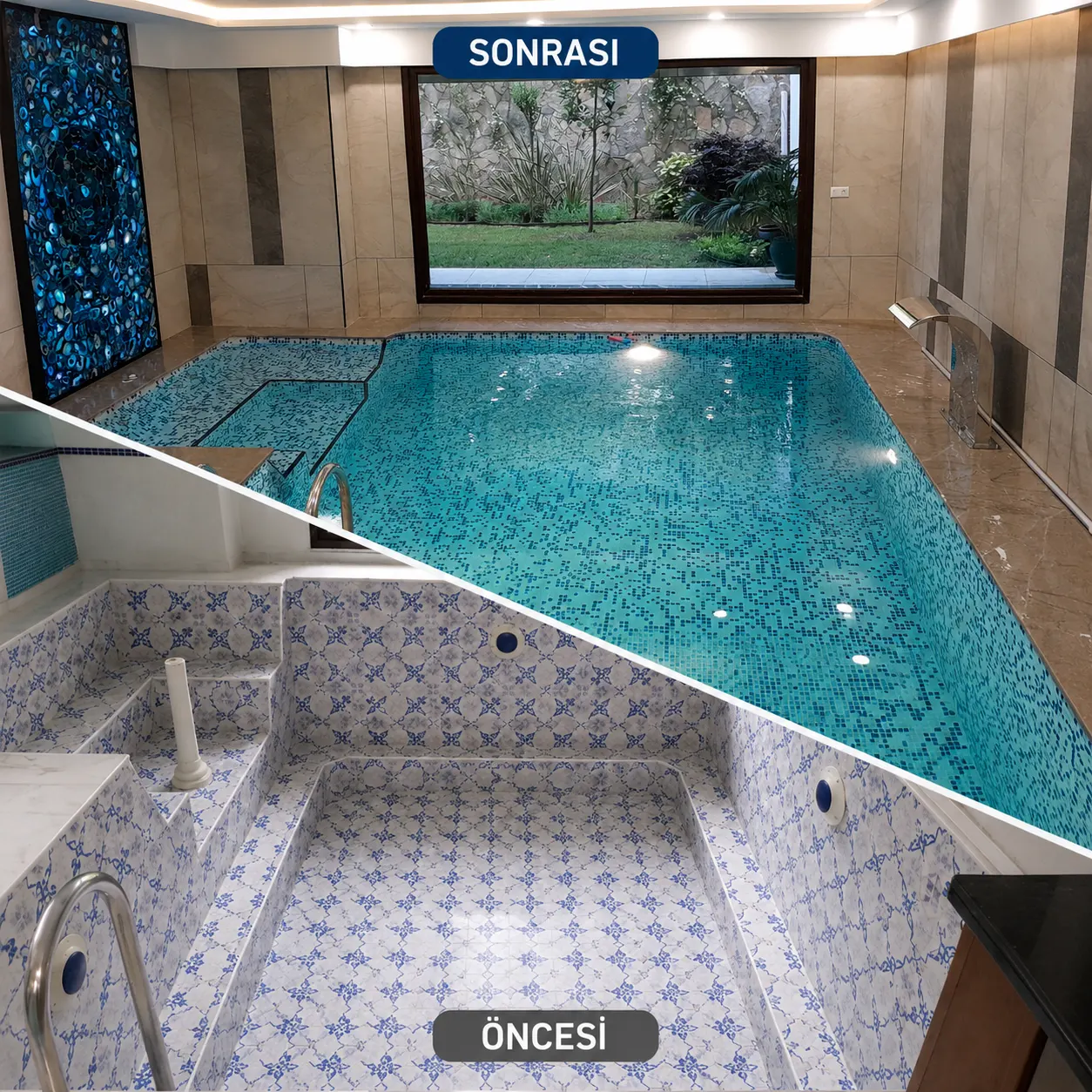
Swimming pool and massage pool featuring a modern pool design engineered with calculations and professionally implemented
Where Should Pool Renovation Begin? First, Identify the Problem Correctly
Before deciding to renovate a pool, the most important step is to thoroughly inspect the existing structure and technical systems. Because a visible problem in a pool may often be a sign of another, deeper issue. For example, a constantly decreasing water level may not only be caused by a surface crack; a leak in the plumbing line, connection points or insulation system can also cause the same problem.
For this reason, professional pool renovation should not be considered merely as replacing a broken component or covering a damaged surface. The pool structure, plumbing, filtration system, pump, electrical infrastructure, waterproofing, coverings and auxiliary equipment should all be evaluated as a whole.
With a proper inspection and system fault detection, the source of existing problems can be identified. This makes it possible to avoid unnecessary interventions and perform work only on the areas that require it. This approach helps keep renovation costs under control while also contributing to a longer-lasting repair.
What Problems Does Pool Renovation Cover?
Pool renovation does not consist of a single application. Depending on the existing condition of the pool, different technical and aesthetic works may need to be carried out together. While mosaic renewal may be sufficient for some projects, other pools may require plumbing, leak, pump, filtration, insulation and electrical systems to be addressed together.
It is quite common for multiple problems to occur simultaneously, especially in pools that have been in use for many years. Aging plumbing may cause deformation in the mosaics, water leaks may lead to surface damage, or old mechanical equipment may reduce the circulation performance of the pool.
The purpose of professional renovation work is not only to eliminate the existing malfunction, but also to restore the overall operating system of the pool to proper working condition. Therefore, conducting a comprehensive assessment before renovation is of great importance.
System Fault Detection: Finding the Cause Behind the Visible Problem
For example, insufficient performance of the filtration system may cause the water to become cloudy or lead to problems in maintaining balanced pool chemistry. Similarly, if the pump cannot provide sufficient flow, circulation may weaken and the system may fail to operate as intended.
Correct Detection, Correct Repair
During system fault detection, instead of examining only the area where the malfunction is visible, the operating condition of the entire system should be evaluated. The source of the problem is determined by checking pump performance, filter connections, valve systems, plumbing lines and water circulation.
This approach is particularly important in older pools. Over the years, different repairs may have resulted in independent modifications to the system. Examining the entire existing system allows the renovation to be planned more effectively.
Evaluating Technical Systems Together During Pool Renovation
Intervening only in the visible surface of the pool may not solve an underlying technical problem. For a lasting result, all components, from mechanical systems and plumbing to insulation and electrical infrastructure, must be evaluated together.
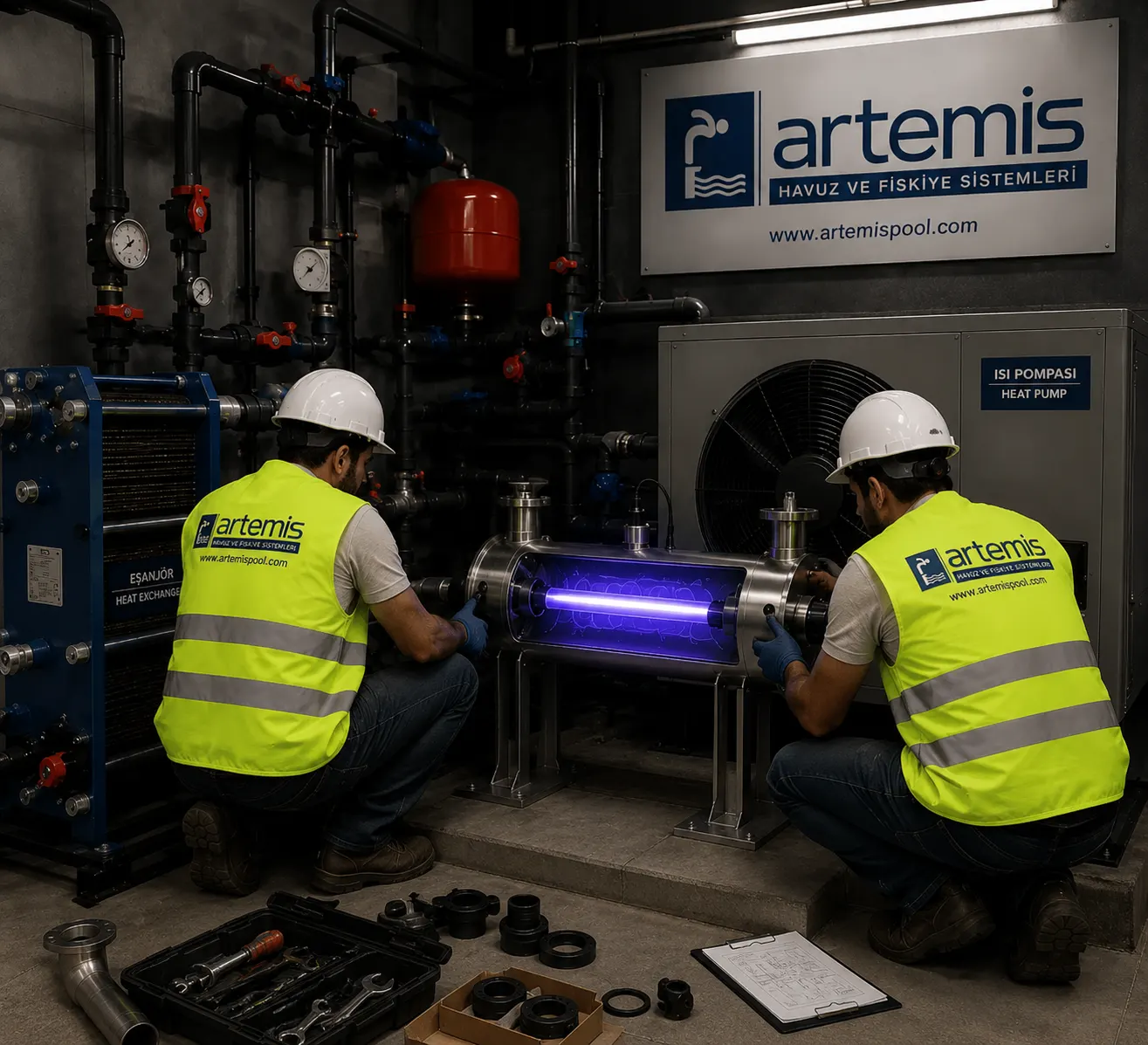
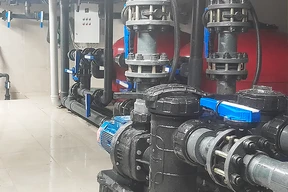
Mechanical System Inspection: The operating condition of the pump, filter, valves, skimmer, main drain and return systems is examined.
Plumbing Inspection: Leaks, breaks, blockages and connection problems in the pipelines responsible for water circulation are investigated.
Waterproofing and Surface Inspection: The pool structure, surface coverings and waterproofing layers are evaluated to identify points that may cause water loss.
Electrical System Inspection: Lighting, electrical connections, control panels and the electrical infrastructure of pool equipment are inspected.
This holistic approach ensures that pool renovation is not merely a temporary repair, but a long-term improvement project.
Renovation of Pool Pumps and Filtration Systems
1. Checking Pump Performance
The pool pump is one of the essential pieces of equipment that ensures water circulates throughout the system. Insufficient operation, excessive noise, frequent shutdowns or inability to provide adequate circulation can affect the overall performance of the system. During renovation, the pump's existing capacity should be evaluated together with the requirements of the pool.
2. Filtration System Renewal
The filtration system plays an important role in keeping pool water clean and clear. Aging filter equipment or an inappropriate filter capacity can make pool maintenance more difficult. When necessary, renewing filtration equipment can contribute to more efficient system operation.
3. Valve and Connection Inspections
Valves and connection points in filter and pump systems should also be inspected regularly. Loose, worn or damaged connections can cause water loss and reduced system performance.
Consider Both Aesthetics and Technical Performance When Renovating Your Pool
During pool renovation, it is possible not only to resolve technical problems but also to improve the overall appearance and usability of the pool. Especially in older pools, renewing surface coverings, replacing lighting and updating the surrounding landscaping can give the pool a completely different appearance.
Mosaic Renewal: Replacing broken, cracked or detached mosaics can make the pool surface more aesthetic and durable.
Grout Renewal: Renewing worn grout improves visual integrity and helps protect the surface.
Pool Surround Renovation: Renewing worn surfaces around the pool can improve overall safety and aesthetic appearance.
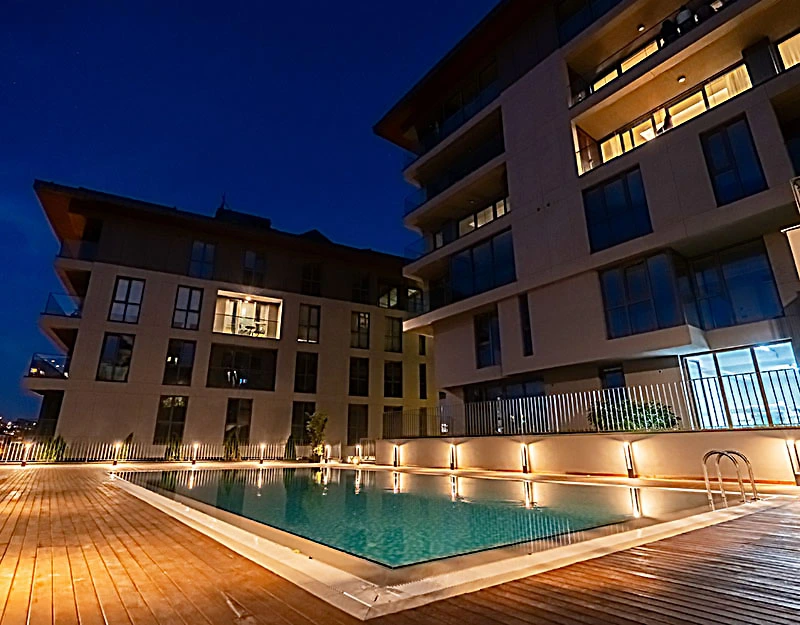
Pool Lighting: Replacing outdated or underperforming lighting systems can enhance the pool's nighttime appearance and usability.
Modern Covering Solutions: Older pools can be given a more modern appearance with new covering options that complement the architecture of the project.
Technical Equipment Renewal: Replacing pumps, filters and auxiliary equipment that have reached the end of their service life can improve system performance.
Energy Efficiency: Choosing more efficient equipment can help reduce operating and maintenance costs in the long term.
The aim of modern pool renovation is not to unnecessarily change the existing structure, but to correctly renew the areas that need improvement and increase the pool's aesthetic and technical value. A properly planned renovation can bring an old pool in line with today's usage and design expectations.
Mosaic Renewal: Completely Transforming the Appearance of Your Pool
Pool mosaics can wear over time because they are constantly exposed to water, sunlight and pool chemicals. In some cases, mosaics may only experience color fading, while in other pools more serious problems such as breakage, cracking, blistering or detachment may occur.
Mosaic renewal should begin with an assessment of the condition of the existing surface. Instead of applying a new covering directly over loose mosaics, the strength of the surface should be checked and the necessary preparation should be carried out. This helps ensure that the new application adheres better to the surface and can be used for a long time.
When selecting mosaics, the suitability of the material for pool conditions is just as important as color and pattern. Properly selected covering materials can enhance the aesthetic appearance of the pool while also providing advantages in terms of long-term use.
Plumbing Repair and Renewal
Pool plumbing is often out of sight, but it is one of the most critical parts of the system's operation. Cracks, breaks, connection problems and blockages in plumbing lines can negatively affect water circulation.
Plumbing leaks: May cause continuous water loss in the pool or moisture to form in the surrounding areas.
Broken pipes: Can occur for various reasons, especially in older plumbing systems.
Connection problems: Loose or worn connections can lead to water loss.
Blockages: Can reduce circulation and cause the pump system to operate more than necessary.
What is important in plumbing repair is not only replacing the damaged section, but also checking the overall operating condition of the system. After the repair, retesting the plumbing and checking the connections are important for ensuring the reliability of the work.
Pool Leaks: A Small Water Loss Can Be a Sign of a Bigger Problem
Pool leaks are often noticed by users simply as a drop in the water level. However, water loss that occurs beyond normal evaporation is a condition that should always be investigated.
A leak may originate from the pool structure, plumbing pipes, drains, connection points or mechanical equipment. Therefore, looking only at the pool surface is not sufficient when detecting a leak.
Before leak repair, the source of the problem should be identified as accurately as possible. Surface-level applications carried out without determining where the leak originates may cause the same problem to reappear shortly afterward.
Repair of Breaks and Cracks
Cracks, covering damage or breaks occurring on the pool surface can grow over time. Especially on surfaces that are constantly exposed to water, neglecting even a small amount of damage can lead to the need for more extensive repairs.
For this reason, during crack and break repair, not only the visible part of the damage but also its cause should be evaluated. A surface crack and a structural problem should not be repaired using the same method.
Proper surface preparation, the correct repair material and subsequent inspection are important for ensuring that the repair is long-lasting.
Pool Electrical Inspection and Renovation
The electrical system in pools is one of the technical areas that requires the greatest attention in terms of safety. Since lighting systems, pumps, control panels and other electrical equipment operate in the same environment as water, the electrical infrastructure must be inspected regularly.
Pool lighting: Faulty or damaged lighting systems should be inspected.
Electrical connections: Loose or worn connections should be identified.
Control panels: It should be evaluated whether the system is operating safely.
Electrical equipment: The electrical connections of pumps and other equipment should be inspected.
Work on pool electrical systems should be carried out in accordance with the necessary technical knowledge and safety standards. Especially in applications where water and electricity are present in the same area, safety should never be treated as a secondary consideration.
Pool Positioning: What Should Be Considered During Renovation?
In a pool renovation, not only the interior surface of the pool but also the surrounding areas should be evaluated.
Villas and Private Residences: Bringing the pool into harmony with the existing architectural structure can enhance the overall aesthetic value of the living space.
Hotels and Holiday Resorts: Choosing coverings and technical systems that can withstand intensive use is important for operation.
Residential Complexes and Shared Pools: Safety, durability and ease of maintenance should be prioritized.
Maintenance and Ease of Operation After Pool Renovation
The purpose of a successful renovation is not simply to renew the pool for that particular day. The work should also aim to make the maintenance and operation process easier in the following years.
Filtration: Filter systems should be suitable for regular inspection and cleaning.
Pump: It is important that the pump operates at a capacity appropriate for the pool's requirements.
Plumbing: Regular inspection of connections and lines helps identify potential leaks at an early stage.
Mosaics and Grout: Early repair of surface damage can prevent more extensive renovation work.
Electrical: Regular inspection of lighting and electrical systems is important for safe use.
Regular monitoring of these maintenance processes extends the lifespan of the renovation while helping the pool to be used more safely and efficiently.
The Future of Pool Renovation: Smarter, More Efficient and Sustainable Systems
As pool technologies continue to develop, the use of more efficient and intelligent systems in renovation projects is becoming possible. Reducing energy consumption, using automated control systems and improving equipment efficiency are becoming increasingly important in modern pool projects.
Smart Pool Systems: Systems that allow filtration, temperature, lighting and certain technical functions to be controlled automatically provide ease of use.
Energy-Efficient Pumps: Next-generation pump systems that provide lower energy consumption can help reduce operating costs.
Modern Filtration Solutions: More efficient filtration systems contribute to maintaining water quality and simplifying maintenance processes.
LED Lighting Systems: Modern LED solutions can enhance the pool's nighttime aesthetics while also providing advantages in terms of energy efficiency.
Things to Know Before Pool Renovation
Before starting a pool renovation, the existing condition must be analyzed correctly, the scope of the work to be carried out must be determined, and priorities must be established properly. Every pool has a different structure, age, equipment, and set of problems. Therefore, directly applying a solution used for another pool does not always produce the correct result.
Especially in cases involving leaks, plumbing problems, and structural cracks, the source of the problem should first be identified. Then, the existing condition of the surface, plumbing, mechanical systems, and electrical infrastructure should be evaluated and a renovation plan should be prepared accordingly.
This approach prevents unnecessary work while providing a more effective solution that can improve the pool's long-term performance.
Reevaluate Your Old Pool with Pool Renovation
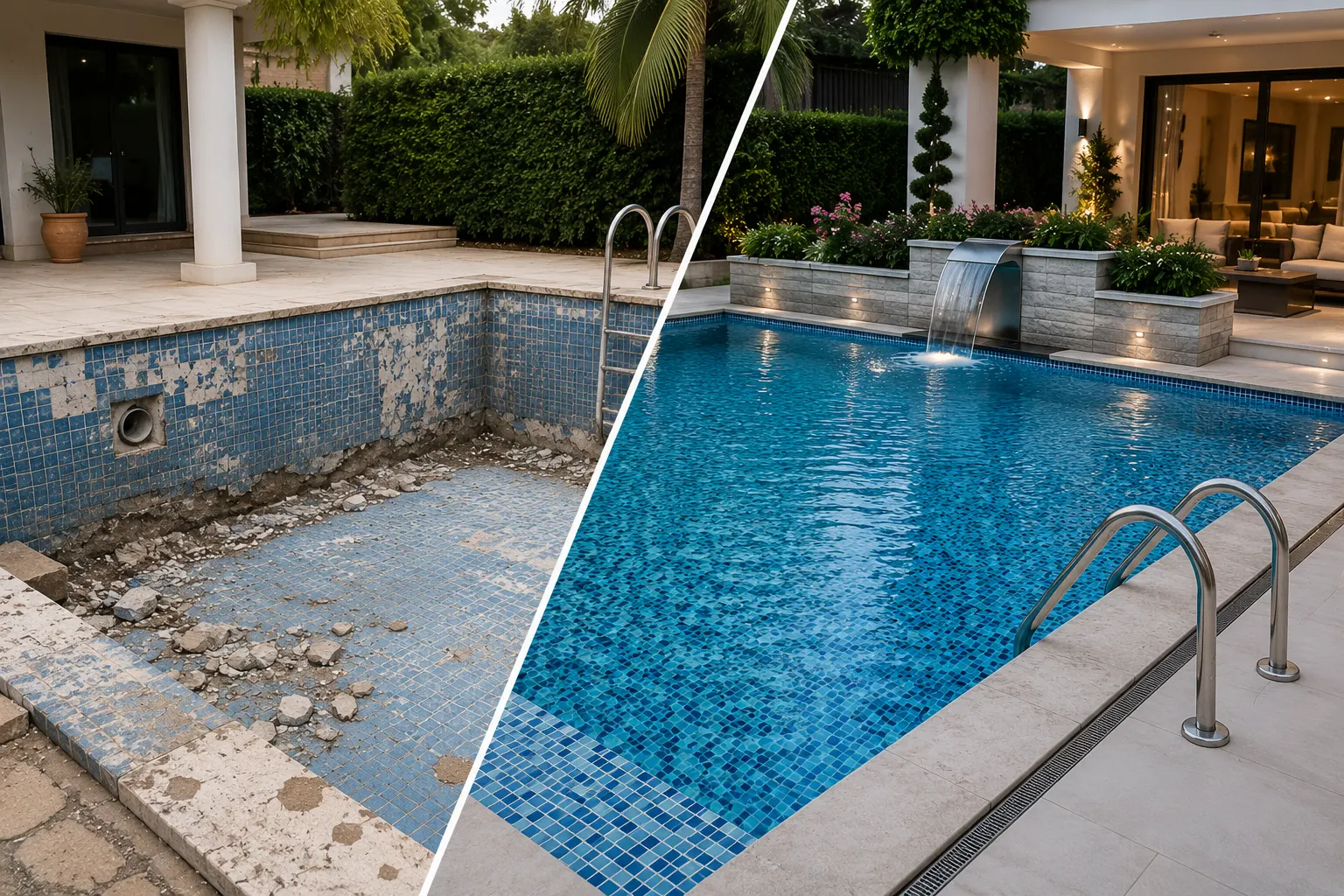
A pool built many years ago does not necessarily need to be completely demolished and rebuilt. If the existing structure is suitable, a properly planned renovation can significantly renew the pool.
By replacing the mosaics, repairing the plumbing, eliminating leaks, improving the pump and filtration systems, checking the electrical infrastructure, and redesigning the pool surroundings, an old pool can be given a modern appearance.
Therefore, if your pool looks outdated or has various problems with its technical systems, having the existing structure professionally evaluated first would be the right starting point.
Conclusion: Pool Renovation Is Not Just Repair, but a Process of Restoring Value
Pool renovation is a comprehensive renewal process designed to make an aging pool or one experiencing various technical problems safe, aesthetically pleasing, and functional again. From system fault detection to mosaic renewal, plumbing repair to leak and crack repair, electrical inspection to mechanical equipment improvements, many different types of work can be part of this process.
The foundation of a successful renovation is accurate diagnosis, proper planning, and quality application. Rather than simply covering up a visible problem, identifying its underlying cause helps ensure that the work lasts longer and prevents more serious problems from occurring in the future.
The value of a pool is determined not only by its size or design. Properly functioning technical systems, sound plumbing, effective filtration, durable surfaces, reliable electrical infrastructure, and regular maintenance are also important components of a pool's true value.
If your pool has water loss, mosaic damage, plumbing problems, cracks, pump failures, or issues with the electrical system, evaluating the problem before it becomes more serious is the best approach. With professional pool renovation, you can preserve the existing structure, extend its service life, and transform your pool into a modern living space that you can enjoy again.
Professional Renovation Solutions for Your Pool
For more information about pool renovation, system fault detection, mosaic renewal, plumbing repair, leak and crack repair, and electrical inspection and renovation, you can explore our technical blog content. We accurately identify the problems in your existing pool and develop safe, aesthetic, and long-lasting solutions.
Renovation may be required if there are water leaks, plumbing problems, cracks or breaks, deterioration of mosaics, performance loss in pump and filtration systems, or problems with the electrical system. Pools that have aged and lost their overall appearance can also be modernized through comprehensive renovation work.
What work is carried out first during pool renovation?
The first stage of pool renovation is a detailed inspection of the existing condition. The pool structure, plumbing system, pump and filtration equipment, mosaic and surface coverings, waterproofing, and electrical infrastructure are inspected. Following the system fault detection process, the necessary repair and renovation work is planned.
How is a water leak in a pool detected?
Pool leaks may be noticed through signs such as the water level dropping faster than normal, moisture or water accumulation around the pool, and pressure problems in the plumbing system. However, to accurately determine the source of the leak, the pool structure, plumbing lines, connections, and related equipment must be evaluated together.
When should pool mosaics be replaced?
Replacement may be necessary if the mosaics show breakage, cracking, detachment, bulging, or significant grout deterioration. During mosaic replacement, not only the visible surface but also the condition of the underlying surface should be inspected. This helps ensure that the new covering is more durable and long-lasting.
Can leaks or breaks in pool plumbing be repaired?
Yes. Once the source of the plumbing problem has been correctly identified, damaged connections, pipe lines, or related equipment can be repaired or replaced when necessary. After the repair, it is important to inspect the plumbing again and test whether the system is operating properly.
Is the pool electrical system inspected as part of the renovation?
Yes. Pool lighting, electrical connections, control panels, and related electrical equipment can be evaluated as part of the renovation. In pools where water and electricity are present together, it is extremely important for the electrical infrastructure to operate safely and properly. Work on electrical systems must be carried out by qualified professionals.
Does an old pool need to be completely rebuilt?
Not every old pool needs to be completely rebuilt. Depending on the condition of the existing structure, the pool can be modernized by renewing the mosaics, repairing the plumbing, eliminating leaks, improving the pump and filtration systems, inspecting the electrical infrastructure, and renovating the surrounding areas.
How long does pool renovation take?
The duration of pool renovation varies depending on the scope of the work and the condition of the existing pool. The work period for a pool requiring only mosaic or surface renewal is not the same as that of a pool requiring plumbing, leak, mechanical system, and electrical renovation. A more accurate work plan can be prepared after an initial inspection and system fault detection.
Is only the problematic area repaired during pool renovation?
The scope of the renovation is determined according to the existing problem. However, especially in cases involving leaks, plumbing, and mechanical system problems, it is more effective to inspect the entire system rather than intervening only in the visible area. This allows the actual source of the problem to be identified and helps prevent unnecessary and recurring repairs.
Is maintenance required after pool renovation?
Yes. Regular maintenance after renovation extends the service life of the renewed systems and surfaces. Periodic inspection of filtration, pumps, plumbing, mosaics, electrical systems, and other technical equipment helps identify minor problems before they become more serious.
Our Blog Posts
Up-to-date blog articles about our areas of expertise and application solutions.
As Artemis Pool & Fountain Systems, you can access detailed information about our products, applications, and fields of activity through our E-Catalog. Our engineering-focused solutions and professional services in compliance with international standards are summarized in this catalog.