What Is FINA (World Aquatics)?
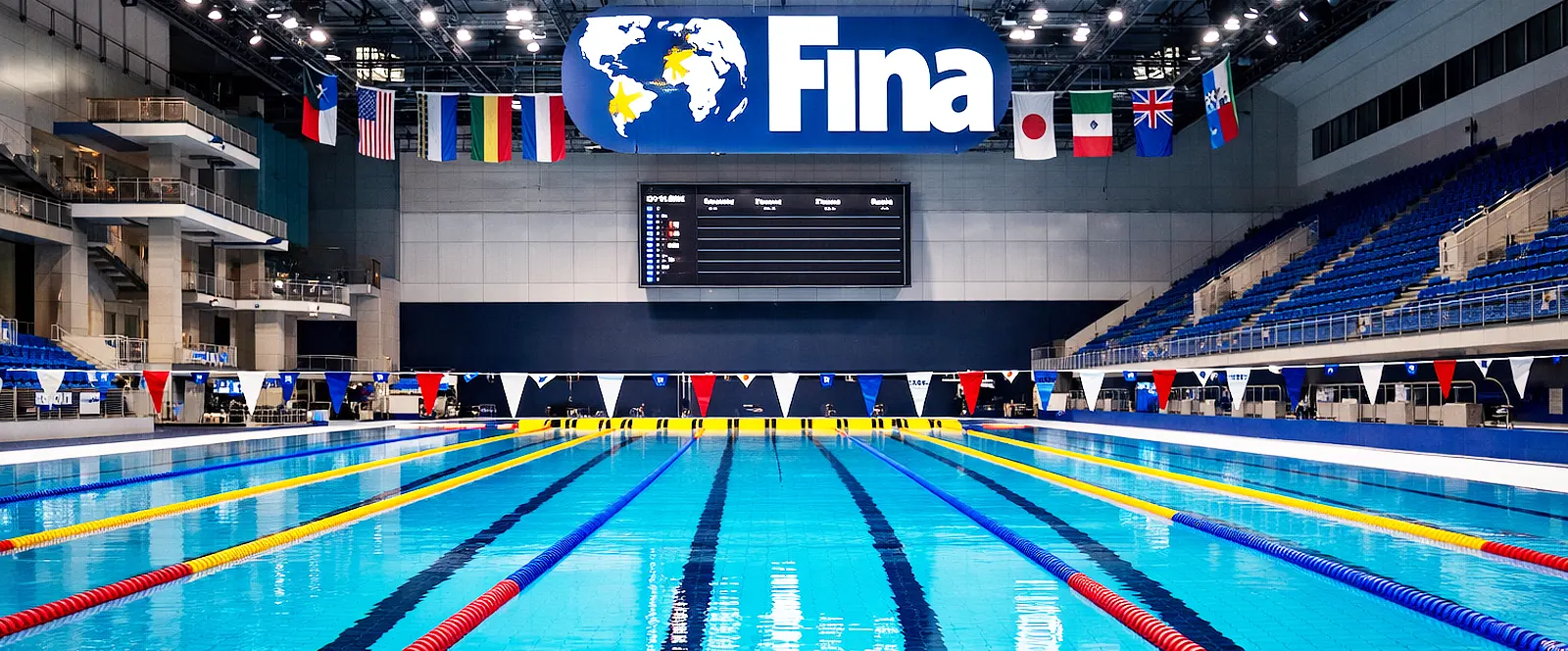
FINA, short for Fédération Internationale de Natation, is the international governing body of swimming. Today, it operates under the name World Aquatics.
This organization:
- Sets swimming competition rules
- Defines Olympic pool standards
- Supervises international competitions
- Determines technical equipment standards
Thanks to FINA standards, a fair and equal competitive environment is ensured in swimming worldwide.
Olympic Pool Dimensions (FINA Standards)
According to FINA, Olympic swimming pools must meet specific dimensions. These include not only length, but also width, lane structure and depth.
Basic dimensions
- Pool length: 50 meters
- Pool width: 25 meters
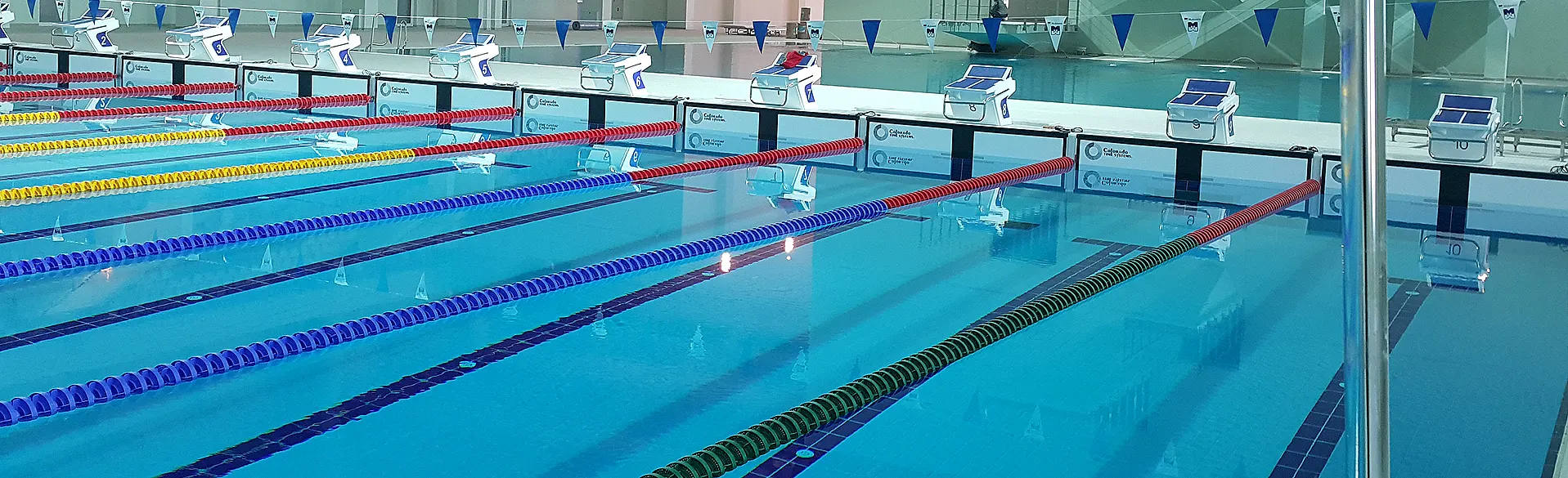
- Number of lanes: 8 or 10
- Lane width: 2.5 meters
- Minimum depth: 2 meters
For more detailed measurements, you can review our
Olympic pool dimensions guide
.
Lane System and Wave Control
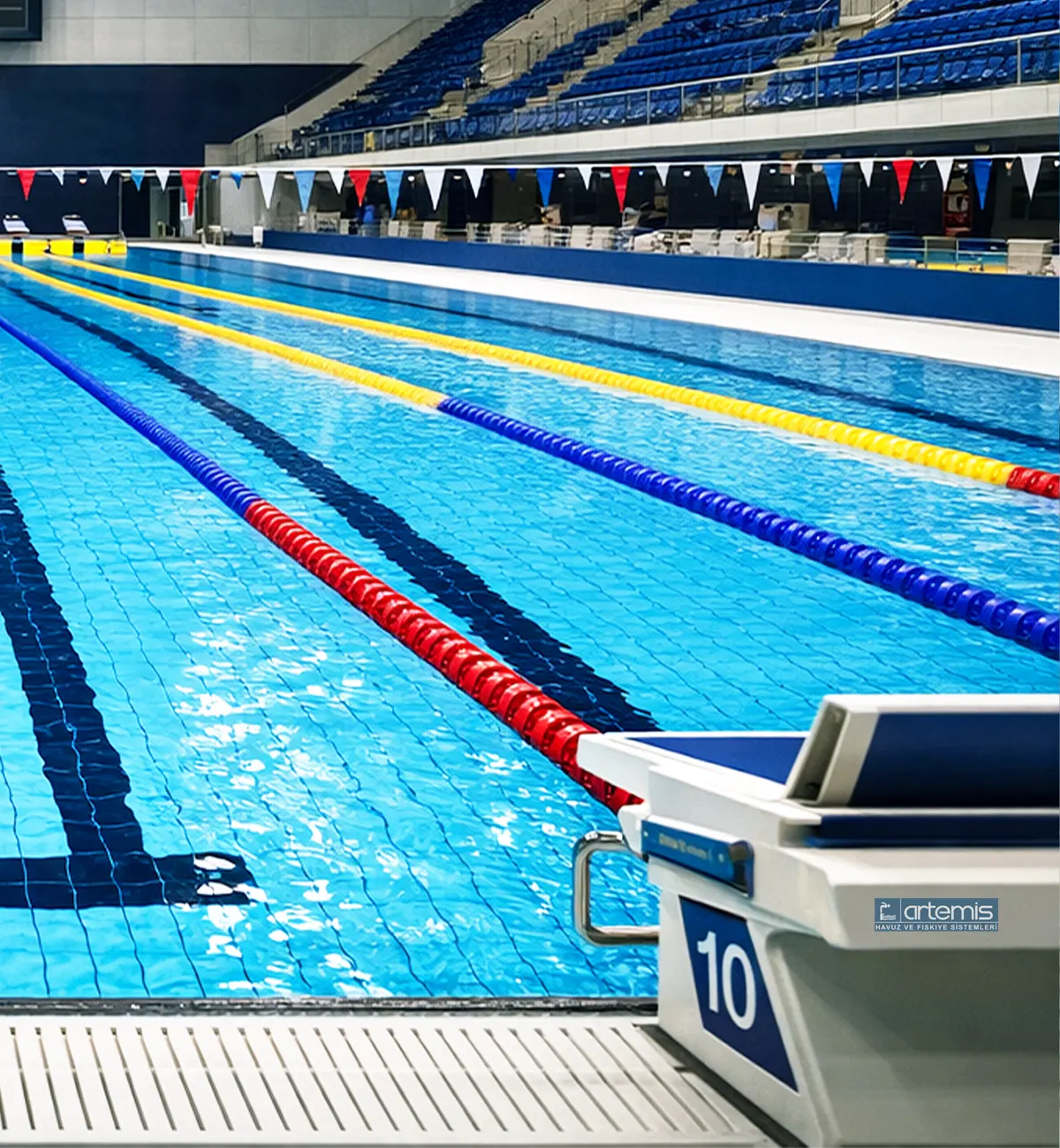
In FINA standards, the lane system is not only a swimming area but also a performance factor.
Lane separators:
- Absorb waves
- Reduce impact on adjacent lanes
- Improve swimmer performance
These systems ensure fair competition conditions.
Water Depth and Performance Relationship
Pool depth directly affects swimming performance. Deeper pools reduce wave reflection.
For this reason, modern Olympic pools are often designed with depths reaching up to 3 meters.
Pool Filtration and Water Quality Standards
According to FINA standards, water quality is as important as competition performance. At this point,
pool chemicals and
filtration systems play a critical role.
Water quality criteria
- pH balance (7.2 – 7.6)
- Chlorine level
- Water clarity
- Microbiological control
Insufficient filtration systems can render the pool unusable.
Pool Automation Systems
In modern pools,
pool automation systems allow all processes to be controlled automatically.
Automation systems:
- Automatically adjust chemical dosing
- Manage filtration systems
- Optimize energy consumption
- Enable remote control
Scoreboard and Timing Systems
According to FINA standards, timing systems are mandatory in competitions. These systems operate integrated with
scoreboard systems.
- Touchpad panels
- Starting blocks
- Electronic timing systems
- Digital scoreboards
These systems provide millisecond precision measurements.
Pool Mechanical Infrastructure and Hydraulic System
The performance of a pool depends not only on its dimensions but also on its mechanical infrastructure.
For an optimal system:
- Balance tank must be correctly calculated
- Water circulation must be balanced
- Filtration capacity must be sufficient
For these calculations, a
pool calculation report should be prepared.
Pool Maintenance and Operation Process
Regular maintenance is essential to ensure the long-term sustainability of a pool designed according to FINA standards.
- Filter cleaning
- Chemical measurement
- Water analysis
- Equipment control
With proper maintenance, the system can operate smoothly for many years.
Importance of FINA Standards
These standards are not only important for competitions but are also critical for user safety.
- Ensure fair competition conditions
- Improve swimmer performance
- Provide a hygienic environment
- Ensure international compliance
Conclusion
FINA pool standards form a comprehensive system covering all processes from the design to the operation of
swimming pools.
Compliance with these standards in a professional pool project is essential in terms of water quality, performance and safety.
Pools designed with proper engineering and the right equipment can be used efficiently for many years.