A New-Generation Approach to Pool Hygiene: UV Disinfection Technology
What Is a UV Disinfection System for Swimming Pools? Working Principle, Applications, and Benefits
August 03, 2026
15 min read
Share
Maintaining water quality in swimming pools is of great importance not only for user comfort but also for public health and operational safety. Today, the disinfection methods used in modern pool facilities are no longer limited to chemical treatments alone. In recent years, UV (Ultraviolet) disinfection systems have become increasingly common, especially in professional pool projects, playing a significant role in making pool water healthier, clearer, and safer.
UV technology is not a replacement for chlorine. Instead, it is a supplementary water treatment technology that supports the existing disinfection system and significantly improves the microbiological quality of the water. It provides highly effective results, particularly in heavily used swimming pools, by reducing chlorine by-products, lowering bacterial and viral loads, and maintaining sustainable water quality.
In this article, we will take a detailed look at the working principle of UV disinfection systems, why they are used in swimming pools, their advantages, applications, and selection criteria.
✔ 30+ years of experience ✔ Professional project design ✔ Turnkey swimming pool solutions
A detailed technical comparison, cost analysis, and selection guide for UV disinfection systems.
Cleaner and Clearer Pool Water with UV Disinfection
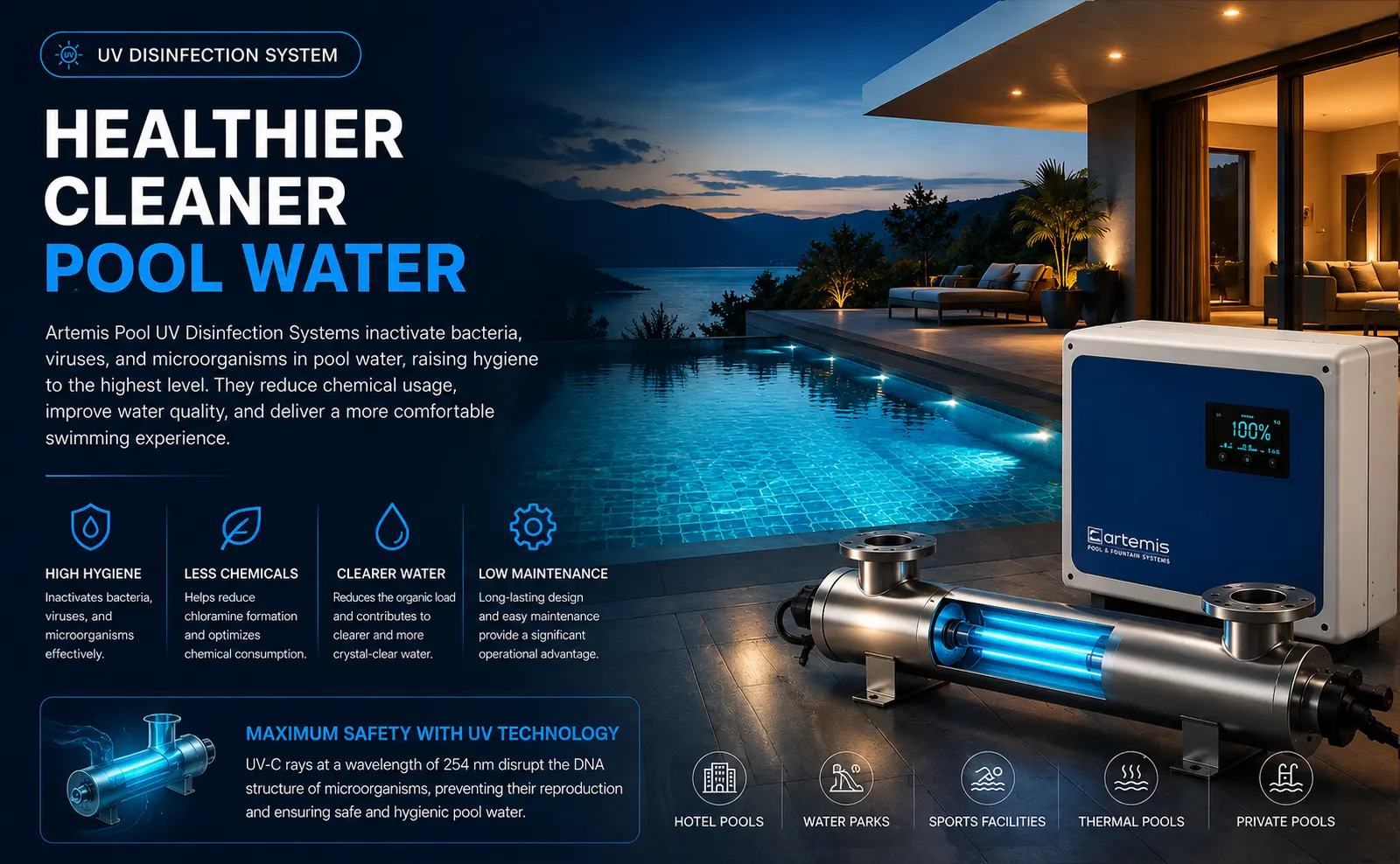
UV disinfection systems help increase the hygiene level of swimming pool water by inactivating bacteria, viruses, and other harmful microorganisms. Working together with filtration and chemical dosing systems, they provide a healthier, clearer, and more comfortable swimming experience.
High Hygiene
UV-C technology prevents the reproduction of microorganisms.
Clearer Water
Improves water quality by helping reduce the organic load.
Less Chlorine Odor
Helps reduce the formation of combined chlorine (chloramines).
Professional Protection
Provides reliable supplementary disinfection for heavily used commercial and Olympic swimming pools.
Continuous hygiene and high water quality with modern UV disinfection technology.
What Is a UV Disinfection System?
A UV disinfection system is a physical disinfection technology based on exposing water to ultraviolet (UV-C) light at a specific wavelength. It is primarily used in commercial and professional swimming pools to support existing filtration and chemical disinfection systems.
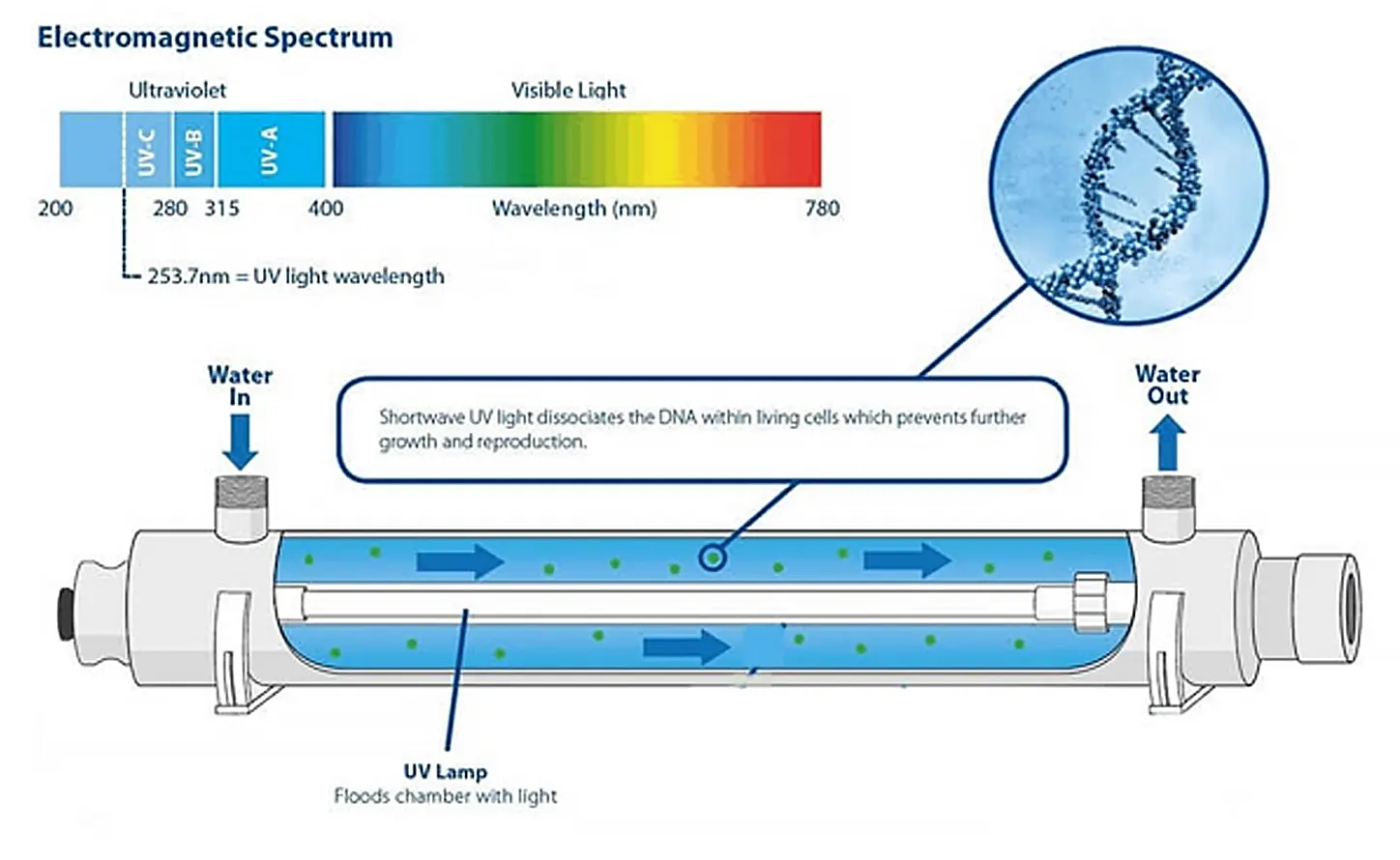
The special UV-C lamps inside the system typically produce light at a wavelength of 254 nanometers (nm). These rays damage the DNA and RNA structures of bacteria, viruses, fungi, and other microorganisms present in the water, preventing them from reproducing. As a result, harmful microorganisms are inactivated, significantly improving the hygiene level of pool water.
UV technology is a completely physical disinfection method. No chemicals are added to the water, and it does not alter the taste, odor, or chemical balance of the water. Therefore, it is considered one of the most reliable supplementary disinfection systems in modern swimming pool projects.
How Does a UV Disinfection System Work?
Working Principle of a UV Disinfection System
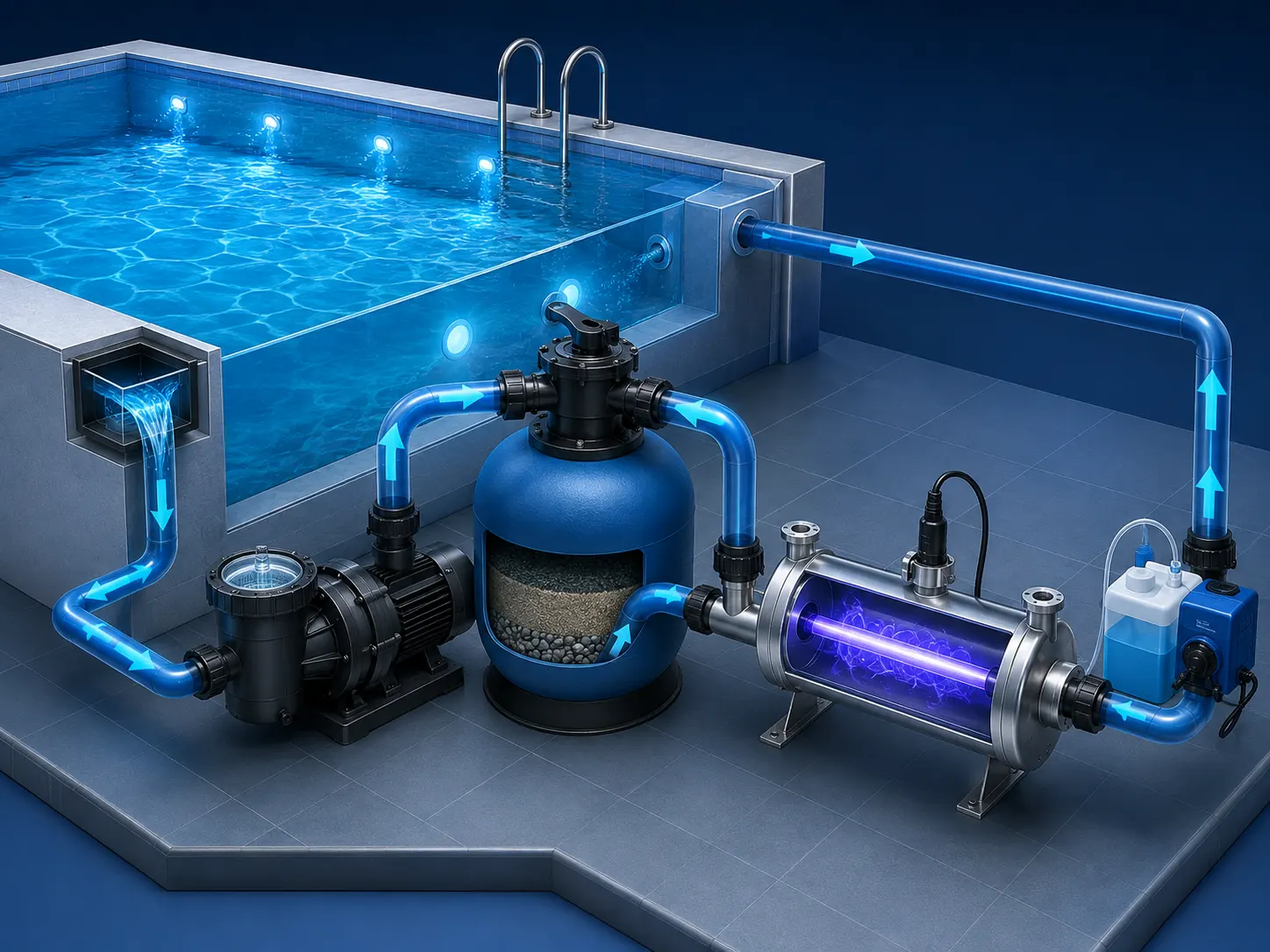
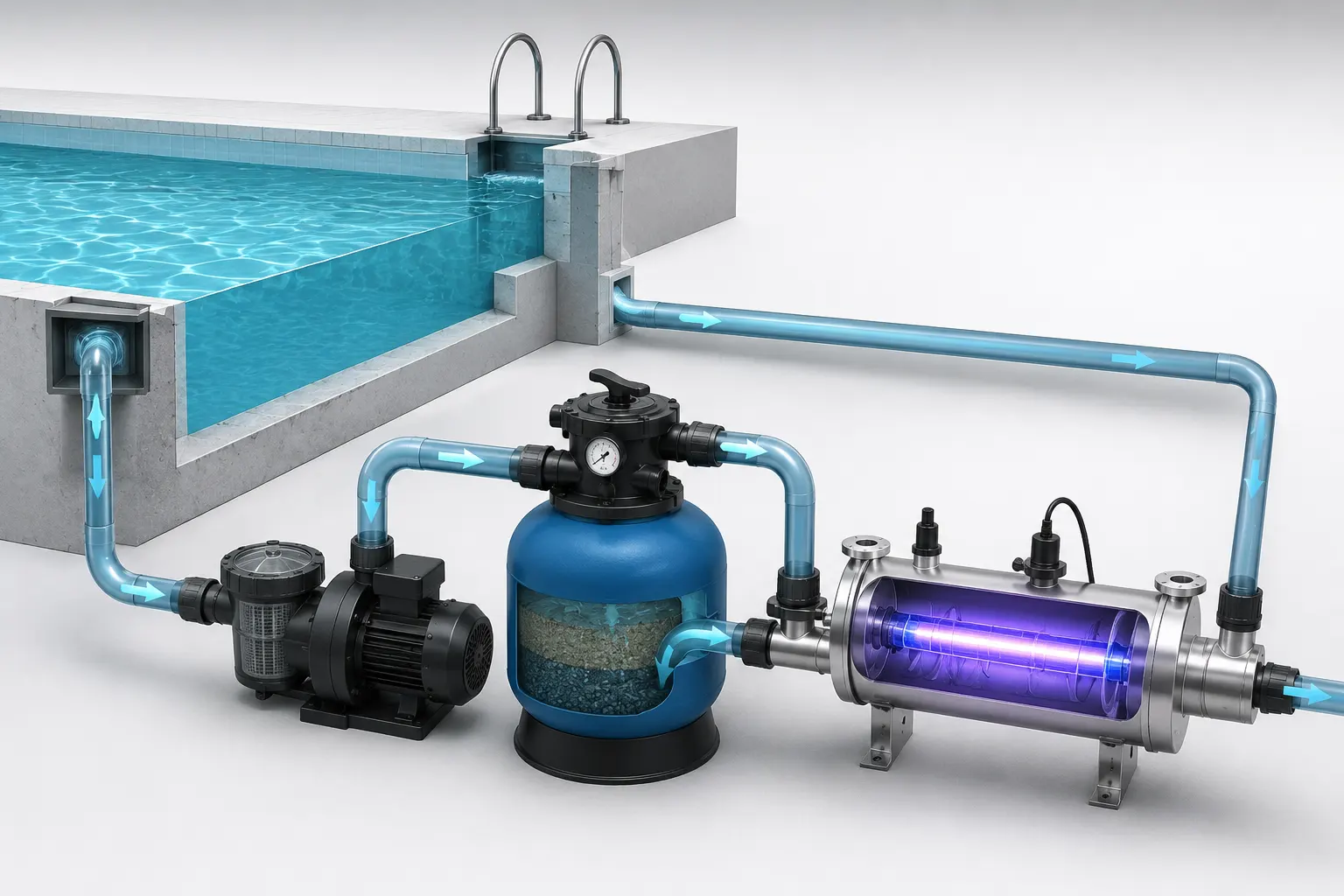
In swimming pools, water continuously circulates through the filtration system with the help of circulation pumps. After passing through the sand filter or other filtration equipment, the water is directed to the UV reactor.
Inside the UV reactor, the water is exposed to powerful ultraviolet rays within seconds by high-efficiency UV-C lamps.
The operating sequence is generally as follows:
Pool water is drawn into the system by the circulation pump.
The filtration system removes suspended particles.
Filtered water enters the UV reactor.
254 nm UV-C rays damage the DNA structure of microorganisms.
Harmful microorganisms become unable to reproduce.
The disinfected water is returned to the pool.
This process takes place fully automatically, and as long as the pool is in operation, the water continuously passes through the UV disinfection system.
Working Principle of a UV Disinfection System
How Do UV Rays Inactivate Microorganisms?
Microorganisms rely on their DNA and RNA structures to survive and reproduce.
UV-C rays cause irreversible damage to the genetic structure of microorganisms, preventing cell division. As a result, the microorganisms can no longer survive or cause infections.
Microorganisms Effectively Controlled by UV-C Rays
Bacteria
Viruses
Fungi
Mold spores
Protozoa
Certain microorganisms responsible for algae formation
UV technology offers a significant advantage, especially in inactivating certain microorganisms that may be more resistant to chlorine.
This improves the microbiological quality of pool water while significantly enhancing user safety.
Can a UV System Replace Chlorine Disinfection?
Can a UV Disinfection System Replace Chlorine?
This is one of the most frequently asked questions in professional swimming pool projects.
The answer is no.
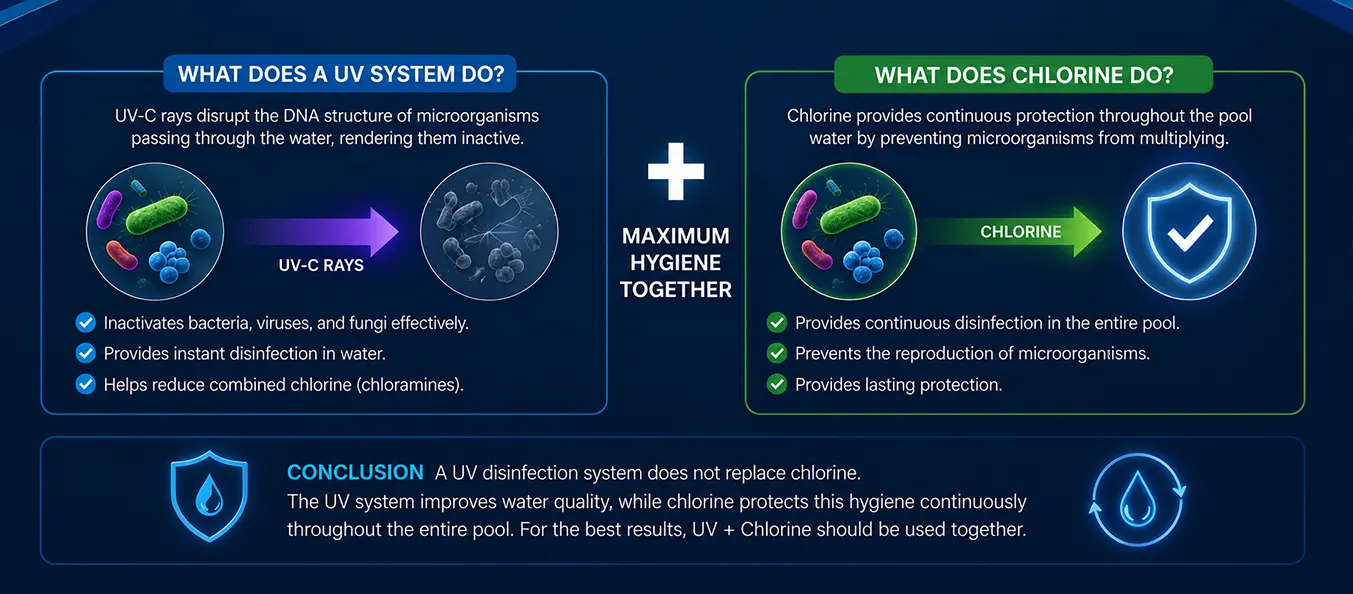
A UV system alone is not a complete swimming pool disinfection system because UV rays disinfect only the water passing through the reactor.
To control new contamination introduced by pool users, a certain level of free disinfectant must remain in the pool water. This role is fulfilled by chlorine.
Therefore, the ideal solution in professional swimming pool projects is the combined use of:
Filtration system
Chemical disinfection
UV disinfection system
This combination provides a high level of hygiene while reducing the formation of combined chlorine, resulting in a more comfortable swimming experience.
Main Functions of UV Disinfection Systems in Swimming Pools
UV disinfection systems not only inactivate microorganisms but also help maintain the overall quality of pool water.
The primary functions of UV systems in professional swimming pool facilities include:
Reducing the microbial load
Preventing bacterial growth
Inactivating viruses
Reducing the formation of combined chlorine (chloramines)
Improving water clarity
Optimizing chemical consumption
Maintaining consistently high water quality
Enhancing user comfort
Supporting the sustainability of hygiene standards
Thanks to these advantages, UV disinfection systems have become standard equipment in many professional facilities, from hotels and Olympic swimming pools to water parks and sports complexes.
What Is Chloramine? Why Is a UV System Important?
The strong chlorine odor commonly noticed in swimming pools is usually not caused by free chlorine but by combined chlorine (chloramines).
As chlorine disinfects the water, it reacts with sweat, urine, cosmetic residues, and other organic matter, forming compounds known as chloramines. These compounds not only reduce user comfort but can also negatively affect indoor pool air quality.
Problems Caused by Chloramines
Strong chlorine odor
Eye irritation and redness
Skin irritation
Respiratory discomfort
Reduced air quality in indoor swimming pools
Decreased user comfort
UV disinfection systems help reduce combined chlorine levels, contributing to a healthier, more comfortable, and higher-quality swimming environment.
Advantages of UV Disinfection Systems
UV technology does more than simply inactivate microorganisms. It also improves water quality while helping optimize operating costs.
1. Healthier Pool Water
UV-C rays inactivate most harmful microorganisms, reducing the risk of infection and improving overall hygiene.
2. Optimized Chemical Consumption
A UV system does not completely eliminate the need for chemicals, but it reduces the burden on chlorine, allowing for more balanced chemical management.
More stable water parameters
Lower combined chlorine formation
Easier chemical control
More efficient facility management
3. Clearer Pool Water
By reducing the organic load, UV systems improve the optical quality of the water. Clearer, cleaner-looking water increases user satisfaction.
4. Reduced Odor Problems
Since UV systems help reduce combined chlorine formation, they can significantly minimize strong chlorine odors.
5. Improved Eye and Skin Comfort
Lower chloramine levels may:
Reduce eye irritation.
Reduce skin dryness.
Minimize irritation.
6. Professional Hygiene Management
As the number of users increases in heavily used commercial swimming pools, the biological load also rises. UV systems make a significant contribution to keeping this load under control.
Where Are UV Disinfection Systems Used?
UV technology is used not only in swimming pools but also in many different water treatment applications. Within the pool industry, it is particularly preferred for commercial projects that require high hygiene standards.
Hotel Swimming Pools
Maintaining water quality is essential in hotel swimming pools with heavy user traffic. UV systems help ensure sustainable microbiological safety even under high bather loads.
Water Parks
Due to water slides and high circulation rates, water parks have a considerable biological load. UV systems help maintain high hygiene standards.
Olympic Swimming Pools
In Olympic facilities operated according to international standards, UV systems are used together with professional filtration and chemical dosing systems.
Municipal Swimming Pools
UV systems provide significant advantages in public swimming pools due to the high volume of daily users.
Sports Complexes
Maintaining consistently high water quality is essential in swimming pools used by professional athletes.
Spa and Wellness Centers
UV systems are widely used in spa facilities because they help provide cleaner, clearer, and healthier water.
Thermal Pools
In thermal pools, where biological load can increase more rapidly due to higher water temperatures, UV systems are preferred as a supplementary disinfection technology.
Residential and Apartment Complex Pools
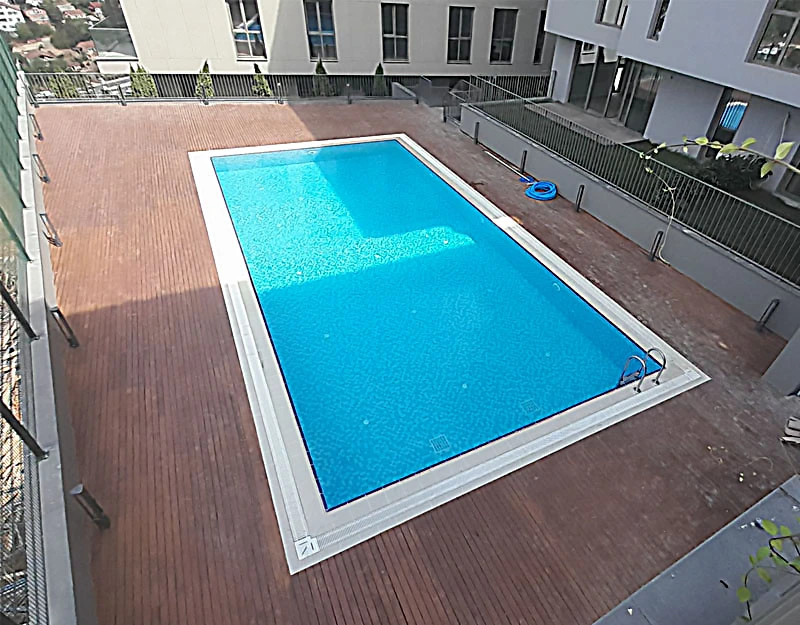
UV systems are also widely used in modern residential projects, helping maintain hygiene standards in shared swimming pools.
Main Components of a UV System
A professional UV disinfection system should consist of high-quality equipment to achieve maximum efficiency.
The following components are typically used:
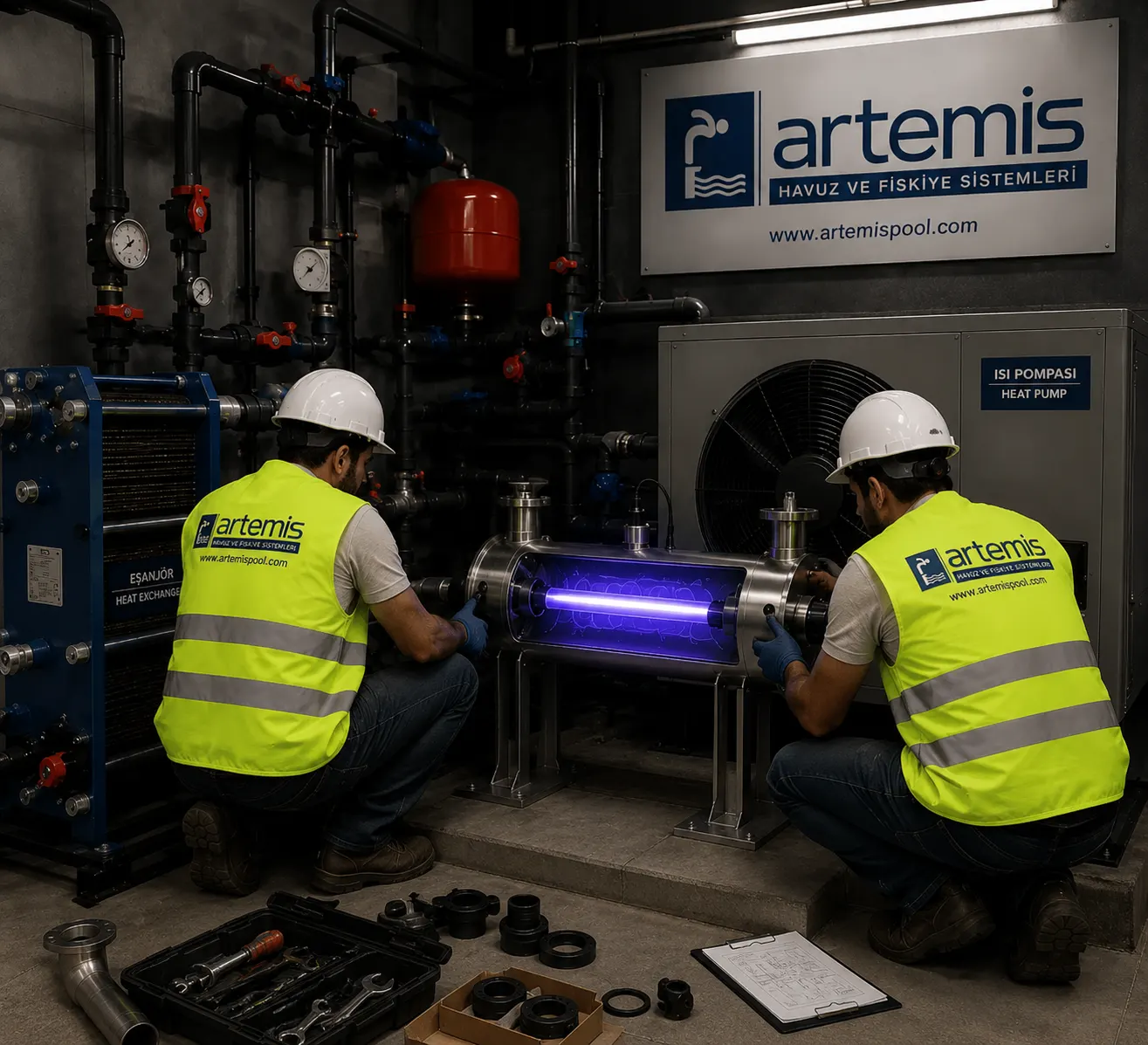
Stainless steel UV reactor
UV-C lamps
Quartz protective sleeve
Electronic ballast unit
Digital control panel
UV sensor (on some models)
Flow control equipment
Electrical connection system
The quality of the equipment used is one of the most important factors directly affecting system efficiency.
What Should Be Considered When Choosing a UV System?
Every swimming pool has different requirements in terms of purpose, water volume, and daily bather load. Therefore, using the same type of UV system for every pool is not the right approach.
The following criteria should be considered when selecting a system for professional projects:
Pool volume
Daily number of users
Circulation flow rate
Filtration system capacity
Chemical dosing system
Water quality
Operating hours
Energy consumption
Ease of maintenance
Availability of spare parts
A properly sized UV system provides maximum disinfection performance while helping keep operating costs under control.
Maintenance of UV Lamps
Regular maintenance is essential to ensure that UV disinfection systems operate at high performance for many years.
Over time, UV lamps may lose light intensity. In addition, limescale and mineral deposits that accumulate on the quartz protective sleeve can reduce UV transmittance.
Routine Maintenance Procedures
Cleaning the quartz sleeve
Checking the operating hours of UV lamps
Replacing lamps when necessary
Testing UV sensors
Inspecting electrical connections
Cleaning the reactor housing
Following the maintenance intervals recommended by the manufacturer is essential for maintaining system performance.
Benefits of UV Disinfection for Pool Operators
The main reason professional pool operators choose UV technology is not only improved hygiene but also the significant long-term operational advantages it offers.
More stable water quality
Increased user satisfaction
Lower combined chlorine levels
Simplified chemical management
Clearer pool water
Higher hygiene standards
Helps protect pool equipment
More efficient long-term facility management
Especially in hotels, sports complexes, water parks, and municipal swimming pools, UV systems improve both the user experience and the sustainability of facility operations.
Difference Between a UV Disinfection System and an Ozone System
Although UV and ozone systems are both advanced water disinfection technologies, they operate on different principles.
While a UV system inactivates microorganisms using ultraviolet light, an ozone system generates a powerful oxidation effect that helps break down organic contaminants.
Both technologies are used in professional swimming pool projects as supplementary solutions that support filtration and chemical disinfection systems.
Advantages of UV Systems
No chemicals are used.
Low maintenance costs.
Provides instant disinfection.
Helps reduce the formation of combined chlorine.
Advantages of Ozone Systems
Provides strong oxidation power.
Helps break down organic contaminants.
Improves water quality.
The choice of technology depends on pool volume, user load, operating conditions, and project requirements. In large-scale projects, UV and ozone systems can also be used together.
Conclusion and Evaluation
In modern swimming pools, chemical disinfection alone may not always be sufficient to meet today's hygiene expectations. For this reason, UV disinfection systems have become an important technology that complements professional filtration and chemical dosing systems.
A properly designed UV system helps inactivate microorganisms, reduce combined chlorine levels, improve pool water clarity, and enhance user comfort.
Especially in hotels, sports complexes, Olympic swimming pools, water parks, spa centers, and heavily used commercial pools, UV technology provides a reliable and sustainable supplementary disinfection solution.
Properly sized, professionally designed, and regularly maintained UV systems deliver high performance for many years, providing significant benefits to pool operators.
For More Technical Blog Articles
You can explore our technical blog for more information about UV disinfection systems, filtration solutions, automatic chemical dosing systems, and modern swimming pool technologies used in professional swimming pool projects.
Frequently Asked Questions About UV Disinfection Systems
Can a UV disinfection system replace chlorine?
No. A UV system cannot replace chlorine. UV technology disinfects only the water passing through the reactor. A certain level of free chlorine is still required to maintain continuous hygiene throughout the pool. The most effective solution is the combined use of filtration, chemical disinfection, and UV systems.
Does a UV system kill bacteria and viruses in pool water?
Yes. UV-C rays damage the DNA and RNA structures of bacteria, viruses, fungi, and many other harmful microorganisms, preventing them from reproducing and rendering them inactive.
Does a UV system reduce chlorine odor in swimming pools?
Yes. UV systems help reduce the formation of combined chlorine (chloramines). As a result, they contribute to reducing strong chlorine odors, eye irritation, and skin irritation.
How often should UV lamps be maintained and replaced?
UV lamps gradually lose their light intensity over time. According to the manufacturer's recommendations, they should generally be replaced after a specified number of operating hours. In addition, regular cleaning of the quartz sleeve is essential for maintaining system performance.
Which types of swimming pools should use a UV disinfection system?
UV systems are widely used in hotel pools, Olympic swimming pools, water parks, sports complexes, spa and wellness centers, thermal facilities, and heavily used residential and apartment complex pools.
Our Blog Posts
Up-to-date blog articles about our areas of expertise and application solutions.
As Artemis Pool & Fountain Systems, you can access detailed information about our products, applications, and fields of activity through our E-Catalog. Our engineering-focused solutions and professional services in compliance with international standards are summarized in this catalog.